A software engineer joins a Bengaluru team while living in Jaipur. A customer-support employee works from home in Lucknow for a Delhi-based company. A finance operations analyst joins a hybrid team with periodic access to the company’s Mumbai office. All three are employment relationships, but the information needed for responsible onboarding may be spread across different cities, employers, universities and official record systems.
For HR teams, a background check for employment should not become less accurate simply because the employee is not physically present at headquarters. At the same time, remote work does not justify intrusive checks unrelated to the job.
Quick answer: Remote employee background verification is the lawful, role-relevant process of checking specific candidate claims–such as identity, prior employment, qualifications and necessary professional credentials–using appropriate sources while coordinating documents, consent or other lawful authorization, findings and clarification across locations. It is different from monitoring someone’s personal life or home activities.
This guide gives Indian employers an operational checklist for remote and hybrid hiring, including a cross-city screening matrix, candidate-data workflow, exception handling and sample reporting language. For a business ready to appoint a provider, Spy Verification Services’ employee background verification page describes the broader employer service.
Why remote and hybrid hiring changes the verification workflow
A conventional on-site onboarding process may give HR a natural opportunity to inspect employment paperwork, confirm basic identifying details and meet candidates. Distributed recruitment changes the logistics. Candidates may upload files from personal devices, previous employers may be in different states and universities may follow their own record-access procedures. Hiring managers may also want access before all checks have finished.
These are process-design challenges, not evidence that remote candidates are inherently riskier. A useful screening programme separates two questions: what information is relevant to the position and how can that information be checked reliably when the participant is elsewhere?
Common coordination challenges include the wrong document version being attached to a candidate record, incomplete employment dates, outdated employer contacts, a location-dependent address check requested unnecessarily and confusion between a pending case and an adverse finding.
A strong process starts with job requirements, not a blanket demand for every personal document. Employers comparing Background Screening Companies in India should ask how candidate records, check scope, corrections and cross-state communication would be handled–not assume a vendor has a particular portal or integration unless that capability is demonstrated.
What should employers verify for remote workers?
The basic question is the same for on-site and remote employees: which factual claims matter to the role? The answer depends on duties, legal obligations, access permissions and the stated recruitment criteria.
| Check | When it may be relevant | What the result should explain |
| Identity consistency | Most roles requiring a reliable employee identity record | Which information was checked and by what authorized method |
| Previous employment | Roles relying on relevant work history | Employer, period or designation supported by the available source |
| Academic qualifications | Roles requiring a specific degree or certification | Institution and qualification facts confirmed or unresolved |
| Professional registration | Regulated or credential-sensitive work | Registration status and source, where applicable |
| Address information | Where a legitimate operational requirement exists | Whether the selected address claim was established and any limitations |
| Relevant court-record check | Only when justified and legally appropriate | Scope, identity-matching basis, case status and limitations |
| Professional references | Where references are a stated part of selection | Nature of the reference and distinction from official record verification |
Avoid presenting all these checks as compulsory for every employee. For example, a remote creative role may not require a physical residence visit. Conversely, a licensed role may require credential checks irrespective of working location.
ID Verification Services, Employment Verification Services and Education Verification Services are different service components; their scopes should not be merged into a vague promise of a single instant result.
A role-based matrix for remote and hybrid employees
HR can prevent unnecessary screening by defining a role matrix before requesting background checks. The example below is an employer-planning aid, not a statutory schedule.
| Worker group | Potentially relevant checks | Separate non-BGV control |
| Remote software engineer | Identity, relevant qualifications, work history | Least-privilege access, MFA and secure device onboarding |
| Hybrid finance analyst | Identity, relevant past employment, qualifications and justified role-specific checks | Payment approvals and segregation of duties |
| Remote customer-support staff | Identity, relevant employment and required education | Account access, privacy training and call-system permissions |
| Contract IT administrator | Role-relevant history, credentials and approved checks | Time-limited privileged access and contractor offboarding |
| Remote healthcare specialist | Qualification and current professional registration where necessary | Clinical supervision and institution-specific safeguards |
| Field-service employee | Identity, relevant qualifications and appropriate driving credentials | Field safety training and equipment controls |
Verification is one layer of risk management. A cleared employment history does not establish that cyber-security controls are unnecessary and an access-control policy does not substitute for verifying a required credential.
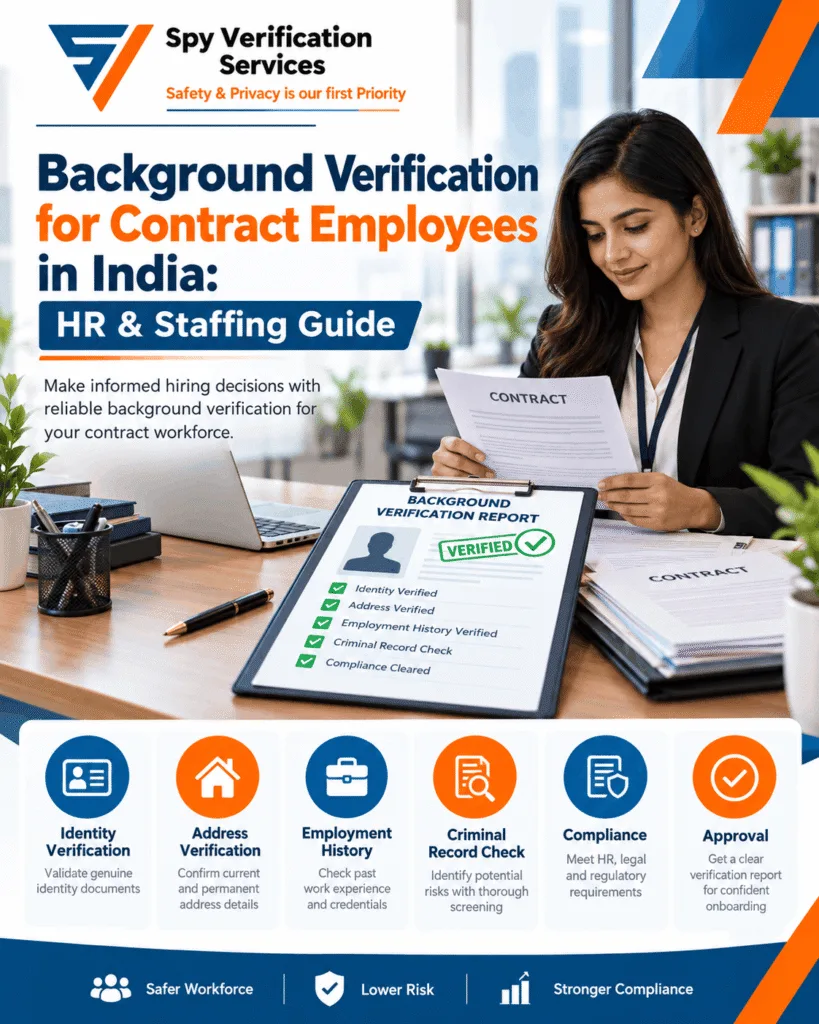
For outsourced roles, the responsibility for collecting information and reviewing findings should be agreed between the hiring business and staffing partner. See Background Verification for Staffing Agencies and Contract Employee Verification in India.
Before the job offer: define the screening brief
The best way to reduce friction is to make the proposed checks intelligible before asking the candidate for records. HR should document the position, recruiting entity, job location or remote arrangement, claims requiring confirmation, selection criteria and who will review findings.
A screening brief might say: “Verify the declared highest qualification and the last two relevant employment periods, subject to available lawful sources.” That is more useful than “do a full background check,” because the latter does not describe the required evidence.
The brief should also set a clear distinction between recruitment documentation and verification data. An onboarding team may need a tax form or bank detail for payroll, but that does not automatically mean the detail is required by the background verification provider.
Before selecting a Background Verification Agency, ask which checks rely on primary sources, which require a local field component, what happens when a university is slow to reply and how the provider explains inconclusive findings.

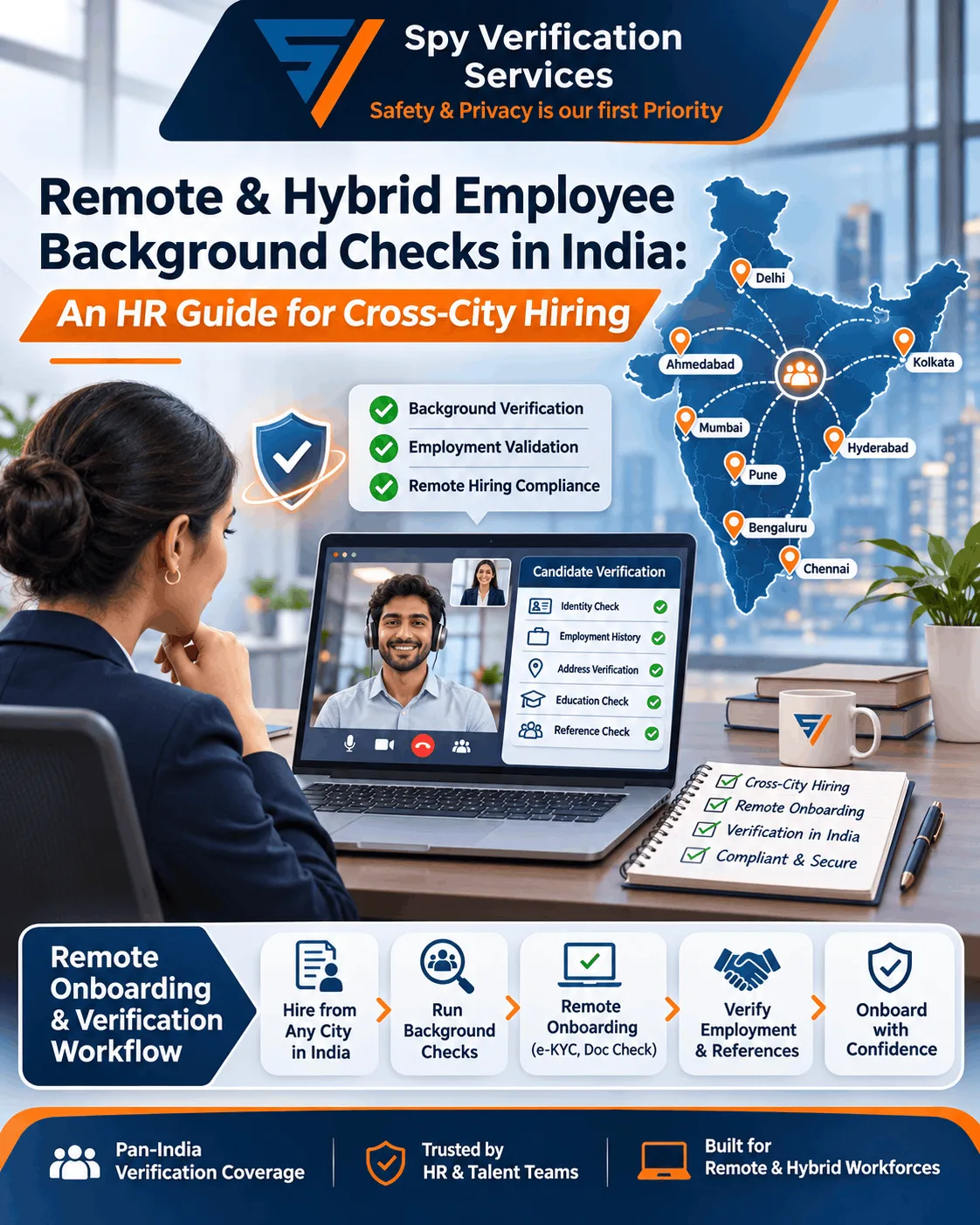
Step-by-step remote employee background verification workflow
Step 1: Record the scope and lawful purpose
Agree the specific verification questions. Note the role and the basis for each requested check. HR should not ask for unrelated digital-account access, personal messaging history or private device content merely because the employee works from home.
Step 2: Explain the process to the candidate
Provide appropriate information about the checks, relevant personal-data handling, authorized recipients and correction route. Consent or another lawful basis must be considered under the rules actually applicable to the processing activity; there is no universal one-sentence compliance shortcut.
Step 3: Collect documents securely
Use approved collection channels, not a chain of personal email forwards or informal messaging groups. Request only what is necessary. Identify each file by candidate reference and document type and limit staff access.
Step 4: Validate candidate identity matching
Before interpreting employment or court records, establish that the subject of the check is correctly matched to the relevant sources. Differences in initials, surname order and transliteration may require careful review rather than automatic rejection.
Step 5: Seek appropriate source confirmation
The provider may contact previous employers, educational institutions or other authorized sources according to the selected checks. A submitted certificate is supporting material; independent institutional confirmation is a different step.
Step 6: Record incomplete and conflicting information
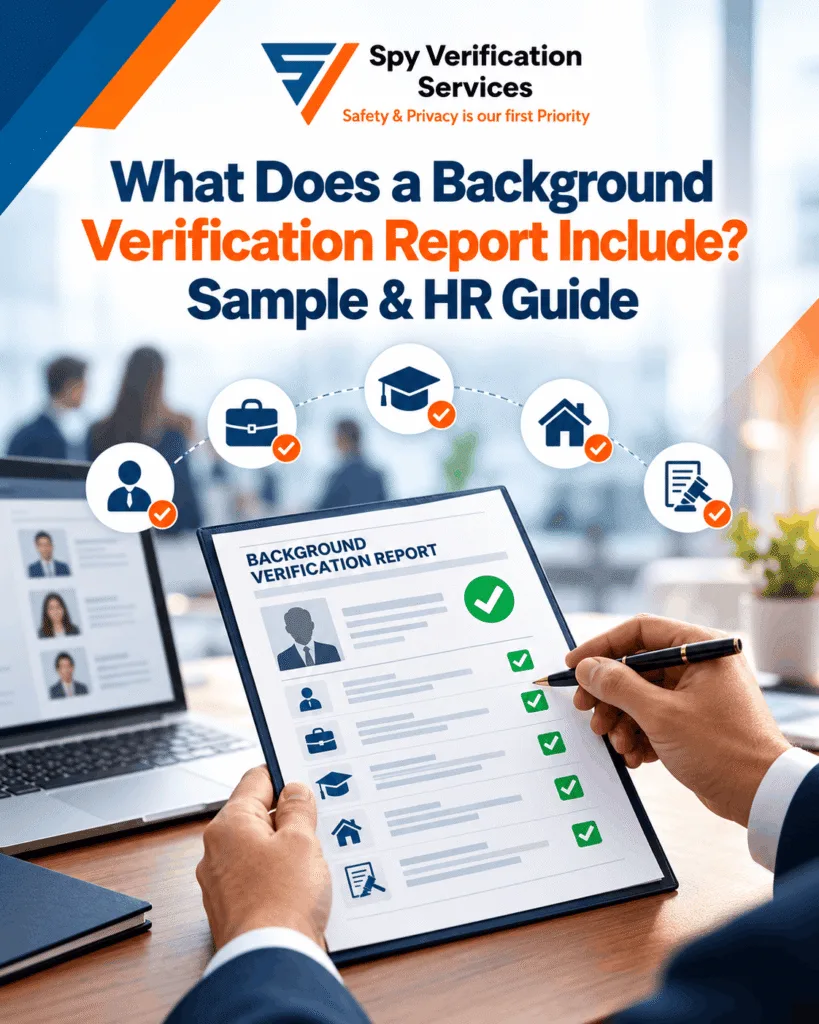
A closed employer, an unavailable registrar and an unmatched document should not all receive the same label. Record what was attempted, what was supported and what remains open. See the background verification report guide.
Step 7: Review with the right decision-maker
The verification provider reports findings; an authorized employer decides what follows. Where a material issue appears, allow appropriate clarification and compare the response with the actual job requirement.
Step 8: Complete onboarding controls separately
After the verification decision, retain only the records needed under the applicable schedule and activate role-appropriate access controls. Do not confuse a finished BGV report with approval for unrestricted access to customer data.
Working across Delhi NCR, Bengaluru, Mumbai and other cities
A remote employee may live in one state, study in another and have worked for employers in a third. The verifier needs to route each question to the correct source jurisdiction, not assume that the candidate’s current home city controls all records.
For example, a candidate living in Noida may have graduated from a university in Karnataka and previously worked in Pune. The highest degree should be checked through a relevant academic source; employment history through an appropriate former employer or lawful alternative; and any justified address check according to the specifically requested address.
This is why a Delhi-based company can support pan-India hiring without claiming to maintain physical offices in every location. Spy Verification Services is based in Delhi NCR and states that it supports verification assignments across India, with feasibility depending on the specific check and source. Its contact page is the appropriate place to discuss location coverage before promising an onboarding deadline.
How to check educational credentials remotely
A PDF sent by a candidate can be useful, but the document’s appearance alone does not verify that the institution issued it. Employers can consider appropriate institution confirmation and, for eligible records, authorized digital academic awards.
India’s National Academic Depository and DigiLocker NAD FAQ explain digital academic award issuance, sharing and authorization. Not every institution or older award is available through the same digital route. The candidate should not be asked to hand over a personal account password or OTP.
If the relevant degree is missing from a digital repository, check whether direct institutional verification is feasible. Unavailable digital data is not automatically a fake degree. A role involving a regulated professional qualification may also require separate registration verification, which is not the same as degree verification.
How to manage a previous employer in another city
An employer’s HR department might use an old email domain, outsource payroll or close after the candidate leaves. Remote hiring can make the follow-up slower, but the proper response is still evidence-based.
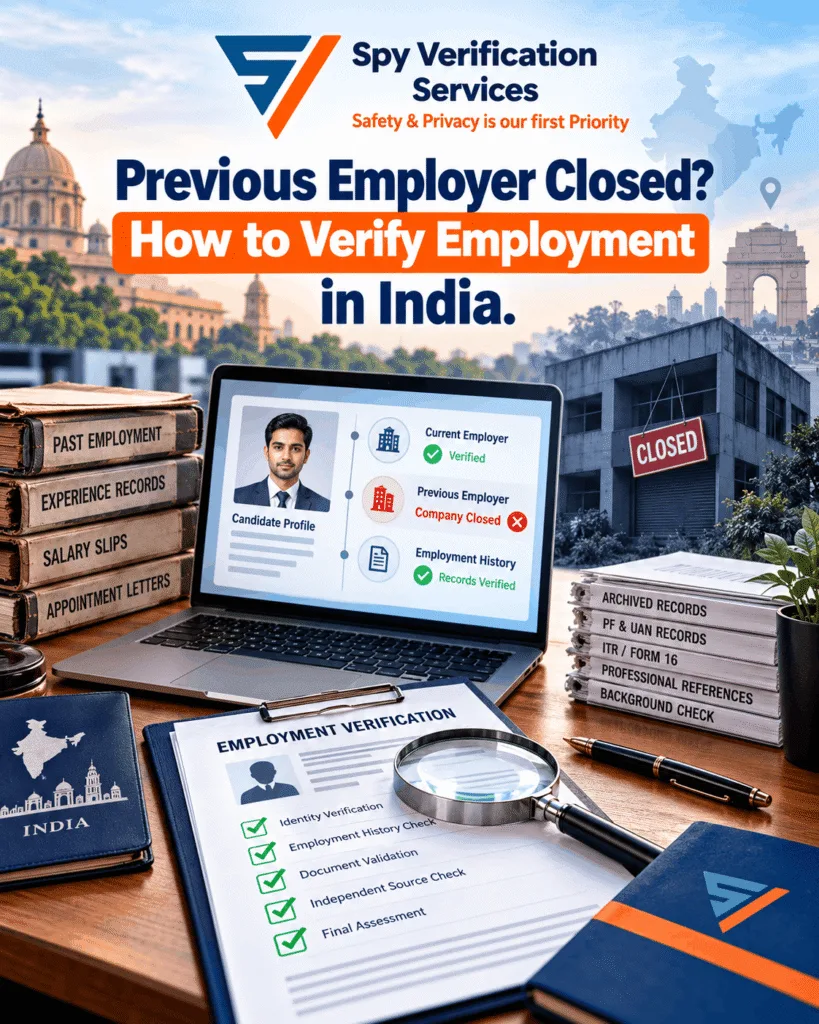
Confirm the employer’s actual legal or operating name, understand whether a staffing company issued the appointment and seek suitable records. When a company has closed, alternative evidence may support some claims while direct employer confirmation remains unavailable. Read Previous Employer Closed? How to Verify Employment in India for a dedicated scenario guide.
Do not claim a candidate’s entire history is verified solely because salary deposits appear in a bank statement. Each source establishes a limited set of facts.
Should remote employees undergo physical address verification?
Not automatically. An employer should first explain the business requirement for checking an address. A residence-location check may be justified in some fieldwork, contractual, regulated or logistics circumstances, but it is not a general substitute for verifying a person’s work qualifications.
Where address information is required, the employer should define whether it needs present residence, permanent residence or a business location and what methods are permitted. An authorized field verification may be relevant in some cases; a document-based review may be sufficient in others.
An inconclusive visit can result from absence, incomplete directions or a recent move. Such outcomes should be described accurately, rather than automatically categorized as misconduct. See Address Verification Services.
What is a fair exception-management process?
Remote onboarding deadlines often pressure HR teams to treat every pending report as an adverse result. A fair process distinguishes at least four states:
| Status | Meaning | Suitable next action |
| Verified within scope | Source supports the specified information | Record the result and scope |
| Pending | A requested verification is incomplete | Confirm next follow-up and owner |
| Discrepancy | Relevant source information differs | Assess materiality and seek explanation |
| Unable to verify | Adequate confirmation was not available | Record limits and decide whether alternative evidence is justified |
No single status determines future employee suitability. The employer should review the specific finding, source quality, job relevance and applicable employment policy.
A practical case log can include candidate reference, requested check, source, last meaningful update, outstanding question, owner, escalation date and resolution notes. That log is an illustrative workflow suggestion, not a claim that Spy supplies a proprietary dashboard.
Privacy, security and fair treatment
The Digital Personal Data Protection Rules, 2025 set phased commencement dates. As of November 2026, not every substantive provision has commenced. Employers should assess currently operative rules along with other applicable obligations and obtain appropriate advice.
Remote arrangements may tempt organizations to overcollect personal data. Avoid requesting private social profiles, location history or continuous camera access without a specific lawful justification. Candidate screening should also avoid unfair assumptions based on location, accent, disability, protected characteristics or a person’s choice of home workspace.
Maintain reasonable access limits, secure transfers, documented retention and correction routes. Where a verification report contains a factual error, there should be a defined way to have it reviewed.
An illustrative remote-hiring scenario
Imagine a fictional employer in Delhi recruiting a hybrid cybersecurity analyst who lives in Chandigarh and studied in Pune. The role requires a named professional certification and documented experience supporting privileged system access. The employer approves identity, relevant education, work history and certification checks. It separately plans access-control, device-security and training measures.
The candidate’s previous employer responds with dates but not designation. The university confirms the degree. The certification registry confirms the relevant credential. The employment report should explain which details were confirmed and which were not, rather than turning a partial employer response into a clean confirmation of every claimed job title.
The hiring team reviews that distinction and decides whether further clarification is necessary. The example is fictional; it is not an actual Spy Verification Services result or evidence of a specific service guarantee.
Candidate File and Escalation Matrix for Remote Hiring
The hiring team should distinguish the fact to be checked, the source and the next operational owner. A single shared mailbox or a candidate’s document upload does not automatically establish a fact. The following matrix can be adapted into the employer’s own workflow.
| Item | Suitable evidence route | What HR should record | Typical escalation |
| Prior employer | Appropriate previous-employer source | Claimed dates; confirmed facts; source limitations | HR if employer is unreachable |
| Academic award | Awarding institution or authorized issuer-backed record | Award, institution, year and matching basis | Candidate clarification if the record is missing |
| Identity variation | Appropriate authorized identity source | Exact variation and evidence supporting continuity | Designated identity reviewer |
| Staffing engagement | Legal payroll employer, with client-work context | Difference between employer and assignment | Staffing provider and hiring HR |
| Pending check | Source-dependent status and action record | Owner, next action and last meaningful response | Authorized employer reviewer |
A remote onboarding spreadsheet should not display full identity documents or detailed court information to unrestricted teams. Status, ownership and secure reference identifiers are usually more appropriate for cross-team coordination.
An actual employer should also decide when verification is considered sufficiently complete for its chosen stage of onboarding, independently of the provider’s output. This makes the background check for employment an evidence process rather than a broad risk label.
Remote employee verification checklist for HR
Before placing a case, confirm the job title, hiring entity and workforce type. State the exact checks required and why they are relevant. Verify whether the candidate is directly employed or supplied through an agency. Use secure documents and a unique candidate reference. Confirm who reviews exceptions and avoid promising a universal completion date.
During the case, distinguish submitted documents from independent source results. Do not call an unresponsive employer a fraudulent one. Record source limitations. After the report, use a controlled employer decision process and keep IT access management separate from the background verification outcome.
For teams building their own internal governance, Background Screening Policy in India provides a policy matrix and checklist. For general check stages, refer to Background Check Process in India.
Frequently asked questions
1. Are remote employee background checks different from office hiring checks?
The factual questions may be similar, but document collection, source coordination and exception management are often more distributed. The screening scope should still follow job requirements rather than working location alone.
2. Can a company verify someone who lives in a different state?
Yes, where the relevant lawful sources and methods are available. Employers should confirm check-specific feasibility instead of assuming every verification type has identical coverage or timing.
3. What is checked in a background check for employment?
Typical role-relevant checks can include identity, relevant employment, qualifications and other justified credentials or records. Not every check is necessary for every employee.
4. Is physical address verification compulsory for all remote workers?
No universal rule makes it necessary for every remote employee. The employer should identify a legitimate purpose and appropriate method before requesting it.
5. Can HR accept a PDF degree uploaded from home?
The PDF can be submitted as supporting information, but its appearance does not necessarily establish issuance. Direct institutional or authorized digital-record verification may be suitable.
6. Does a closed previous employer mean the candidate fails BGV?
No. It may mean direct confirmation is unavailable. Relevant alternative evidence can be assessed and the limitations recorded transparently.
7. Can the verification provider decide to reject the candidate?
The verification provider should report findings. The designated employer makes the employment decision under its policy and applicable law.
8. How long do cross-city background checks take?
It depends on the checks, source access, completeness of documents, holidays and response times. A reliable scope-specific estimate is preferable to an unsupported guarantee.
9. Can screening replace cybersecurity access controls?
No. Verification can support information quality, while security controls, training and access approvals address separate operational risks.
10. How should HR resolve spelling or name differences?
Compare appropriate identifiers and source records, consider explanations and document the result. Similar names should not be treated as proof that two records belong to one person.
Build once, coordinate carefully and review fairly
Remote and hybrid hiring expands the geography of employee onboarding, but it does not change the need for relevant checks, reliable sources and fair human review. A practical programme defines the scope, explains the process, records discrepancies without exaggeration and keeps personal information secure.
Spy Verification Services supports organizations discussing job-relevant employee verification across India. Request an employee background verification plan or contact the team with the role, hiring locations, expected volume and required checks.