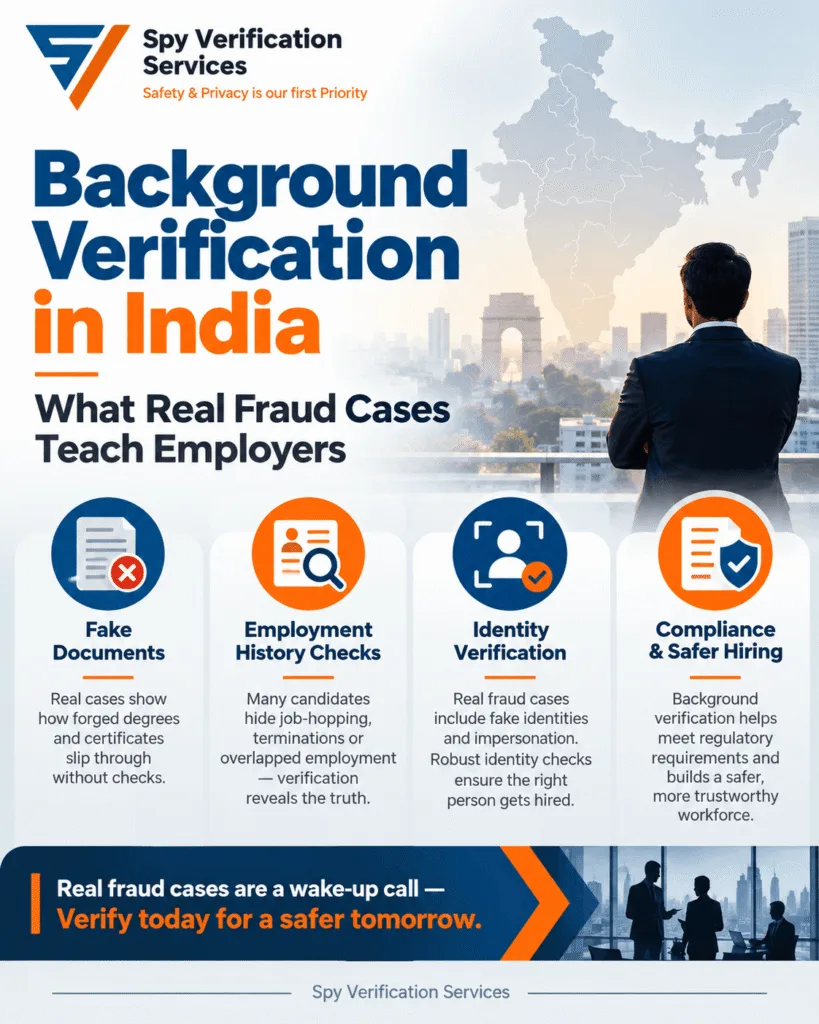
Hiring decisions affect productivity, workplace trust, business continuity, customer relationships and organizational risk. While interviews and resumes help employers assess a candidate, they do not independently verify the accuracy of the information provided.
That is where Employment Background Verification becomes important.
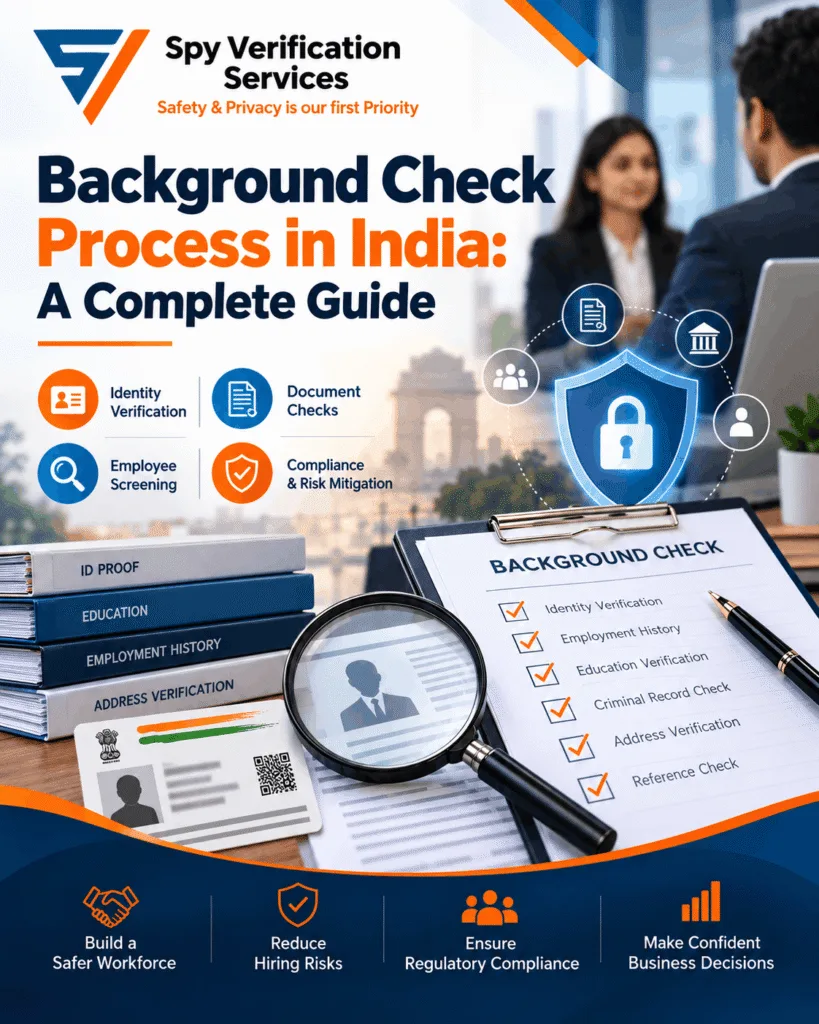
Employment Background Verification is the process of validating a candidate’s identity, previous employment, educational qualifications, address, professional references and other relevant information before or during employment.
With 10 years of experience, more than 1,500,000 verifications completed and 100+ happy clients, Spy Verification Services has practical experience supporting organizations with structured employee verification requirements.
This guide explains what employment verification includes, how it works, why employers use it and what organizations should consider when selecting among Employee Background Verification Companies.
What Is Employment Background Verification?
Employment Background Verification is a structured process used to verify information declared by a job candidate.
Depending on the position, organization, industry and applicable requirements, verification may include:
- Employment history verification
- Education verification
- Identity verification
- Address verification
- Criminal background verification
- Court record searches
- Professional reference checks
- Professional qualification verification
- Database screening
- Candidate document validation
The purpose is not simply to find negative information. The primary objective is to help employers determine whether important information supplied during recruitment can be independently verified.
A well-designed verification program should also be proportionate to the responsibilities and risk profile of the position.
Why Is Employment Background Verification Important?
Candidates may provide resumes, certificates, letters of experience, identification documents and professional references during recruitment.
Employment verification provides employers with an additional layer of validation before making important hiring decisions.
For example, an employee background check may establish whether:
- A previous employer actually employed the candidate
- Employment dates match available records
- The stated designation is accurate
- Educational credentials can be verified
- Identity information matches submitted documents
- Residential information can be validated
- Relevant records require further assessment
- Professional references support the candidate’s employment history
This can be particularly important when employees will handle confidential information, financial responsibilities, customer data, company assets, critical systems, or positions involving significant trust.
What Does an Employee Background Check Include?
There is no single verification package suitable for every organization. Professional Employer Background Check Companies generally offer different checks depending on the employer’s requirements.
Employment History Verification
Employment history verification confirms information about previous employment.
Depending on available records and employer policies, it may verify:
- Previous employer
- Employment dates
- Job designation
- Department
- Employee identification details
- Reporting relationship
- Employment status
- Other permitted employment information
This is an important part of pre-employment background verification because employment history is often central to determining whether a candidate meets a position’s experience requirements.
Education Verification
Education verification checks the qualifications claimed by the candidate against information available from educational institutions or authorized sources.
It may cover the institution, qualification, course, enrollment information, year of completion and qualification status.
Identity Verification
Identity verification helps determine whether the identity information submitted by a candidate corresponds to appropriate records and supporting documentation.
The exact method depends on available documentation, verification requirements and applicable rules.
Address Verification
Address verification helps validate residential information provided by the candidate.
Depending on the verification program, this may involve documentation, database-supported verification, digital processes, or physical verification.
Criminal and Court Record Verification
Where relevant and legally appropriate, background verification may include searches of accessible criminal or court records.
Such checks should be conducted for a legitimate employment purpose and in accordance with applicable laws, privacy requirements, organizational policies and the requirements of the particular role.
Professional Reference Verification
Reference checks provide additional context about a candidate’s previous professional relationships, responsibilities, workplace conduct, or experience.
References should complement other verification methods rather than serve as the sole basis for evaluating a candidate.
How Does Employment Background Verification Work?
A professional verification process should follow a consistent workflow.
At Spy Verification Services, verification requirements are addressed through a structured process that moves from candidate information to documented findings.
A typical Employment Background Verification workflow includes:
1. Information Collection: Relevant candidate information and documents required for the selected checks are collected.
2. Authorization and Consent: Required authorization or candidate consent should be obtained according to applicable requirements and the employer’s verification process.
3. Document Review: Submitted information is reviewed to identify the details requiring verification.
4. Source Verification: Relevant employers, institutions, records, databases, references, or other appropriate sources are used according to the selected verification type.
5. Discrepancy Identification: Differences between declared and verified information are identified and documented.
6. Quality Review: Verification findings are reviewed before reporting.
7. Final Reporting: The employer receives the verification outcome according to the agreed reporting framework.
A standardized process is particularly valuable for organizations managing large recruitment volumes or hiring across multiple locations.
What Happens When a Background Check Finds a Discrepancy?
A discrepancy does not automatically mean fraud or deliberate misrepresentation.
There may be legitimate reasons for differences between candidate information and available records.
For example, a minor difference could result from:
- Different formats for employment dates
- Changes in company names
- Differences between functional and official job titles
- Incomplete historical records
- Spelling variations
- Documentation errors
For this reason, responsible employee verification should distinguish between confirmed information, minor discrepancies, significant discrepancies, unavailable information and cases requiring clarification.
The employer can then evaluate the findings in accordance with its internal hiring policy, applicable requirements and the information’s relevance to the position.
Privacy, Consent and Responsible Background Verification
Employment background screening involves personal information, making responsible data handling an important part of the process.
Organizations should ensure that background checks have a legitimate employment purpose and that necessary permissions or consent are obtained where required.
Verification programs should also consider:
- Candidate privacy
- Appropriate access to personal information
- Purpose-based use of information
- Confidential handling of verification records
- Relevant data protection requirements
- Fair review of discrepancies
- Appropriate retention and handling of reports
Employers should avoid collecting unnecessary information simply because it is available. The scope of verification should correspond to the legitimate requirements of the position.
Why Companies Use Employee Background Verification Companies
Conducting every verification internally can consume significant HR resources, especially when an organization recruits frequently or across several locations.
Experienced Employee Background Verification Companies can provide standardized processes, dedicated verification resources, organized reporting, quality controls and support for different verification requirements.
Organizations commonly outsource employee verification to:
- Reduce administrative workload
- Standardize background screening
- Manage higher verification volumes
- Improve documentation
- Identify discrepancies systematically
- Support multi-location hiring
- Create more consistent recruitment processes
The value of an external verification partner is not simply obtaining a report. It is creating a repeatable process that provides HR teams with clearer information for decision-making.
Spy Verification Services: Experience Built Through 1,500,000+ Verifications
Background verification requires more than access to information. It requires experience in interpreting verification requests, coordinating multiple types of checks, documenting discrepancies, maintaining process consistency and clearly reporting findings.
Spy Verification Services brings 10 years of experience in verification services.
During this period, the company has completed more than 1,500,000 verifications and served 100+ happy clients.
This volume represents practical experience working with different verification requirements, candidate profiles and employer screening needs.
Instead of treating every recruitment requirement the same, employers can select background checks based on the responsibilities, risk considerations and requirements of a particular position.
How to Choose an Employer Background Check Company
When evaluating Employer Background Check Companies, employers should look beyond price.
Important questions include:
- How much background verification experience does the provider have?
- Which employee checks are available?
- What verification methodology is followed?
- How are discrepancies reported?
- How is candidate information handled?
- Is there a quality review process?
- Can the provider manage higher verification volumes?
- Are reports easy for HR teams to understand?
- What support is available when clarification is required?
The best provider should fit the organization’s verification requirements rather than simply offer the longest list of possible checks.
Build a More Informed Hiring Process
Employment Background Verification should not replace interviews, skill assessments, HR evaluation, or professional judgment.
It should strengthen them.
A structured verification program gives employers independently validated information that can be considered alongside the candidate’s qualifications, interview performance, experience and suitability for the position.
With 10 years of experience, 1,500,000+ completed verifications and 100+ happy clients, Spy Verification Services supports organizations looking for a systematic approach to employee background verification.
For employers comparing Employee Background Verification Companies or Employer Background Check Companies, experience, verification methodology, privacy practices, reporting quality and consistency should remain key evaluation factors.
Frequently Asked Questions About Employment Background Verification
1. What is Employment Background Verification?
Employment Background Verification is the process of independently validating information supplied by a job candidate. Depending on the employer’s requirements, it may include employment history, education, identity, address, criminal or court records, professional references and other relevant checks.
2. What does an employee background check include?
An employee background check can include previous employment verification, education verification, identity and address checks, professional references, criminal or court record searches, professional qualification verification and relevant database screening. The exact checks should depend on the position and the employer’s requirements.
3. Why do employers conduct pre-employment background verification?
Employers use pre-employment background verification to confirm important candidate information before making hiring decisions. It can help identify discrepancies in employment, education, identity, qualifications, or other relevant information.
4. How long does Employment Background Verification take?
Turnaround time varies depending on the required checks, the availability of records, response times from employers or institutions, documentation quality, location and whether additional clarification is needed.
5. What happens if background verification finds a discrepancy?
A discrepancy should be reviewed in context. Minor differences do not necessarily indicate intentional misrepresentation. Employers should consider the nature of the discrepancy, supporting information, applicable requirements and its relevance to the position before making a decision.
6. How should employers choose between Employee Background Verification Companies?
Employers should evaluate experience, verification methodology, available checks, reporting quality, data handling, quality-control procedures, capacity, turnaround management and client support when comparing Employee Background Verification Companies.
7. Why consider Spy Verification Services for employee verification?
Spy Verification Services brings 10 years of experience, has completed more than 1,500,000 verifications and has served 100+ happy clients. This practical experience supports structured employment verification requirements across different employer and candidate screening needs.