A resume can tell an employer what a candidate claims to have achieved. Background verification helps determine whether key parts of that information can be verified.
That distinction matters.
Organizations increasingly hire across locations, industries, employment models and digital recruitment platforms. As hiring becomes faster, employers still need a reliable way to verify candidates’ identities, employment histories, educational qualifications, addresses, professional references and other relevant information.
Professional Background Verification Agencies help businesses conduct these checks through a structured, documented process.
Spy Verification Services brings 10 years of experience, more than 1,500,000 verifications and experience serving 100+ happy clients. This practical exposure helps the company support organizations that need consistent and professional background screening as part of their recruitment process.
What Are Background Verification Agencies?
Background Verification Agencies are professional service providers that independently verify information supplied by job candidates, employees, vendors, or other individuals.
The purpose is not simply to search for negative information. A proper verification process establishes whether important information presented during recruitment is accurate, consistent and verifiable through appropriate sources.
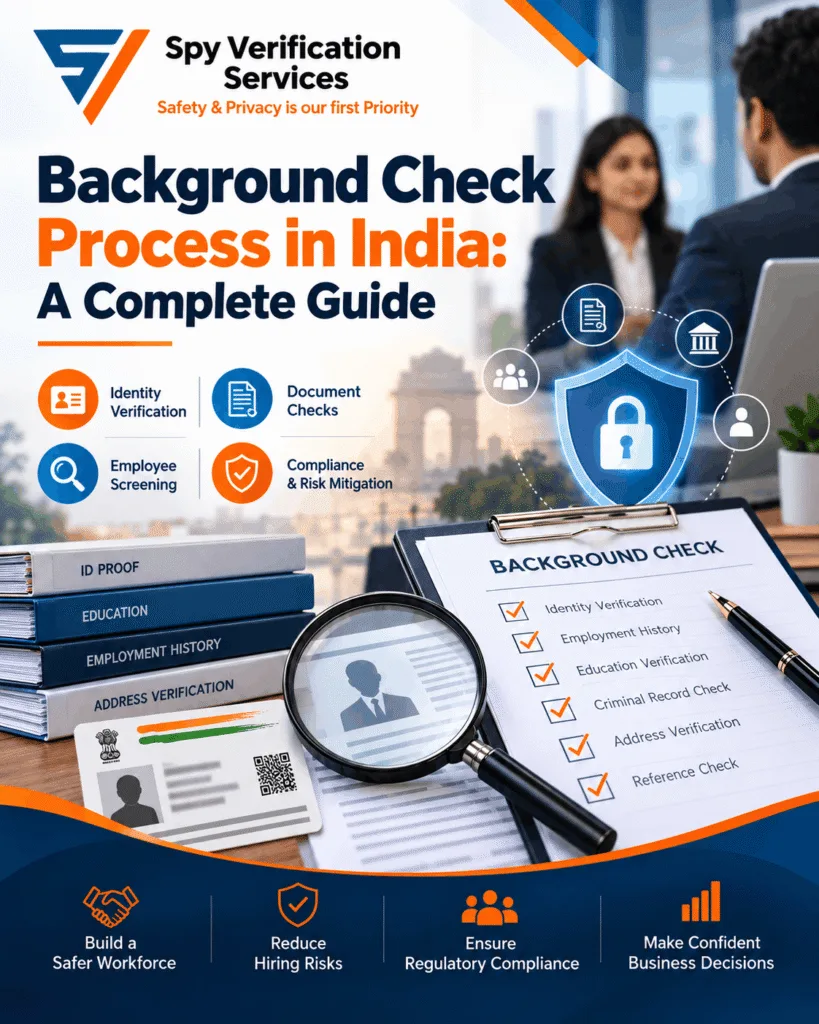
Depending on the role and employer requirements, verification may cover:
- Identity details
- Employment history
- Educational qualifications
- Residential address
- Professional references
- Criminal or court records, where applicable
- Documents submitted during hiring
- Other relevant databases or records
Reliable Background Verification Companies follow a defined process so that employers receive structured findings rather than assumptions or unverified information.
Why Has Background Verification Become Important?
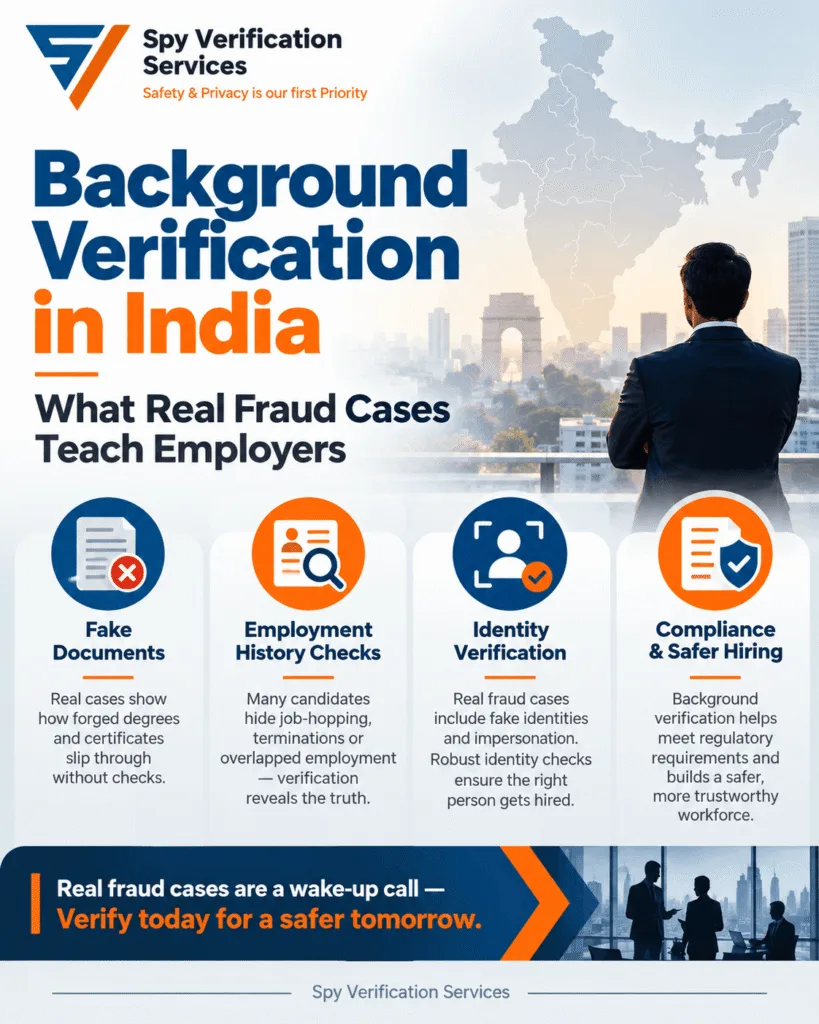
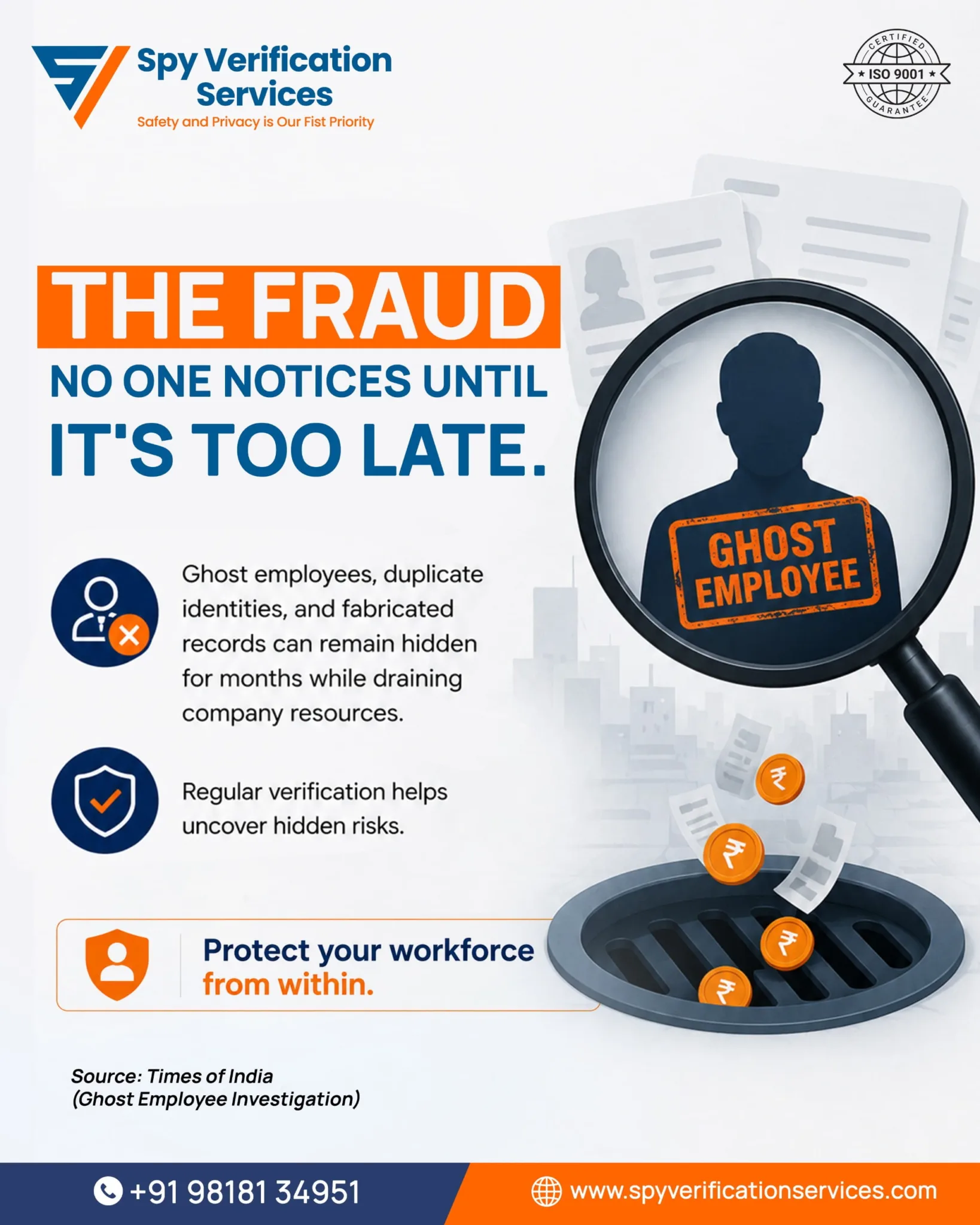
Hiring decisions can affect productivity, customer relationships, workplace access, company data, financial processes, assets, reputation and team performance.
For that reason, an interview and resume may not always provide enough information for an employer to complete its hiring due diligence.
Consider a candidate who states that they worked as a senior manager for four years. The interview may demonstrate strong communication and technical knowledge, but it does not independently establish whether the employer, designation, or employment period stated on the resume is correct.
Employment verification adds that additional layer of validation.
The same principle applies to educational qualifications, addresses, identities, professional references and other relevant candidate information.
Background verification, therefore, helps employers move from candidate-provided information to independently verified information.
What 1,500,000 Verifications Tell Us About Professional Screening
Background verification should rarely be treated as a simple “pass” or “fail” exercise.
With 1,500,000 verifications completed, Spy Verification Services has handled screening at a scale where process consistency, documentation and careful interpretation become especially important.
One practical principle is particularly important:
A discrepancy does not automatically mean fraud.
For example, a discrepancy in an employment date may result from a documentation issue, a payroll date, an interpretation of the joining date, or incomplete information. A qualification may require additional verification because records are older or the institution follows a different response process.
Professional verification should therefore focus on establishing facts and reporting findings clearly.
The employer can then evaluate the relevance of those findings according to the job, company policy and applicable requirements.
This distinction helps make background screening more responsible and useful.
What Do Background Verification Companies Check?
The appropriate screening package depends on the responsibilities associated with the position.
A finance employee may require different checks from a field employee, senior manager, temporary worker, or entry-level candidate.
Here are some of the most commonly requested verification services.
Identity Verification
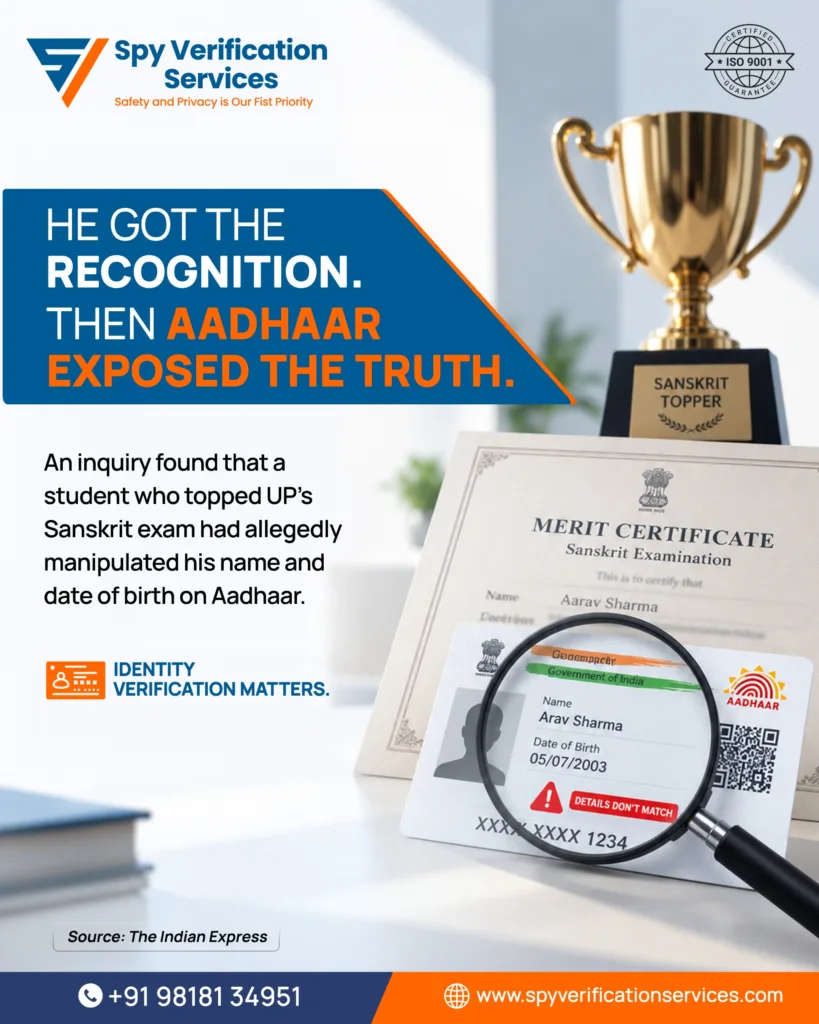
Identity verification helps establish whether important personal information submitted by a candidate corresponds with the supporting records used in the verification process.
A reliable identity check also lays the foundation for other checks, such as employment, education, address and record searches, which must relate to the correct person.
Employment Verification
Employment verification examines relevant information about previous employment.
Depending on the requirement, it may verify details such as:
- Employer name
- Designation
- Employment duration
- Other relevant employment information
This allows an organization to compare resume information with independently obtained verification findings.
Education Verification
Education verification helps confirm whether a candidate’s stated qualifications can be validated by the relevant institution or by available authorized records.
Checks may include:
- Institution
- Qualification
- Course
- Graduation or completion information
- Other relevant academic details
This can be particularly important where a specific qualification is essential for the position.
Address Verification
Address verification helps establish whether the residential information supplied by a candidate can be validated through the applicable verification process.
Employers may include current or previous address checks depending on their hiring requirements.
Criminal and Court Record Checks
Where appropriate, relevant and legally permissible, criminal or court record verification may form part of a background screening program.
Such information should be handled carefully.
A professional approach involves reporting relevant findings objectively rather than making the hiring decision on the employer’s behalf.
Professional Reference Checks
Professional references can provide additional information about a candidate’s work history, responsibilities, professional relationships, or previous workplace experience.
Reference checks should be structured so that employers receive useful information rather than informal opinions.
Document Verification
Documents submitted during recruitment may also require validation.
Document verification can form an important part of screening where employment decisions depend on certificates, identification records, employment documents, or other supporting information.
How Does a Professional Background Verification Process Work?
Although individual checks differ, professional Background Screening Companies generally follow a structured workflow.
Step 1: Define the Required Checks
The employer identifies which verifications are appropriate for the position.
Screening should be relevant to the role rather than collecting unnecessary information.
Step 2: Collect Candidate Information
Required information and supporting documents are collected for the selected verification checks.
Step 3: Obtain Required Authorization
Candidate information should be processed in accordance with applicable privacy, employment, contractual and data protection requirements.
Required notices, permissions, or consent should be obtained where applicable.
Step 4: Conduct the Verification
The relevant details are checked through appropriate verification channels, institutions, records, previous employers, references, databases, or other legitimate sources.
Step 5: Identify and Document Findings
Information obtained during verification is compared with information originally submitted.
Any relevant inconsistencies can then be documented for review.
Step 6: Prepare the Verification Report
The employer receives the findings in a structured format.
The report should make it easier for HR or the authorized decision-maker to understand what was verified and whether any information requires additional review.
Step 7: Employer Makes the Final Decision
A background verification company supplies verification findings.
The final employment decision is the employer’s and should consider the relevance of the findings, organizational policies, job responsibilities, applicable law and any candidate clarifications.
A Practical Background Verification Scenario
Consider an experienced candidate applying for a position where prior managerial experience is a key requirement.
The resume states:
Previous designation: Senior Manager
Employment period: Four years
Qualification: Relevant postgraduate degree
Instead of accepting these statements automatically, the employer requests employment and education verification.
The employment check confirms the employer and employment period, while the designation returned through verification differs from the designation stated on the resume.
This does not automatically determine whether the candidate should be rejected.
The correct approach is to document the discrepancy, obtain clarification where appropriate and allow the employer to assess whether the difference is material to the position.
This example illustrates an important principle of professional screening:
Verification provides evidence for better decisions; it should not replace responsible human judgment.
Why Work With Professional Background Screening Companies?
Organizations can perform some verification activities internally. However, screening becomes more difficult as the number of candidates, locations and verification requirements increases.
Professional Background Screening Companies can provide a more standardized process.
For employers, this may mean:
- Consistent screening procedures
- Clearly documented findings
- Easier management of multiple checks
- Better visibility into discrepancies
- Scalable verification for larger recruitment volumes
- More structured HR decision-making
- Reduced dependence on candidate-provided information alone
A specialized agency can therefore become an extension of an organization’s recruitment due diligence process.

Background Verification Is Relevant for Businesses of Every Size
Background verification is not limited to multinational corporations.
Startups, SMEs, growing businesses, staffing companies, established enterprises, contractors and organizations with high-volume recruitment can all have valid reasons for screening candidates.
A smaller company may have fewer employees, but individual team members can still have substantial access to:
- Customer information
- Business systems
- Financial processes
- Inventory
- Company assets
- Confidential documents
- Operational responsibilities
The important question is therefore not, “How large is our company?”
It is:
“What information should we verify before giving someone responsibility, access, or authority within the organization?”
How to Choose the Right Background Verification Agency
Choosing among different Background Verification Agencies requires more than comparing prices.
Employers should evaluate the agency’s ability to handle verification responsibly and consistently.
Look at Proven Experience
Background screening involves many different verification situations. An experienced agency is more likely to have established workflows for handling them systematically.
Spy Verification Services brings 10 years of industry experience to its verification work.
Consider Verification Volume
Verification volume provides another indicator of operational exposure.
Spy Verification Services has completed 1,500,000 verifications, demonstrating extensive experience handling background screening requirements at scale.
Examine Client Experience
An agency should be capable of supporting organizations with different screening requirements.
Spy Verification Services has worked with 100+ happy clients, adding further practical experience across business verification requirements.
Evaluate the Verification Process
Ask how information is checked, how discrepancies are documented and what information appears in the final report.
Review Confidentiality Practices
Background screening involves personal information.
Employers should understand how information is collected, processed, accessed, retained and protected within the applicable verification process.
Check Service Coverage
The provider should support the verification checks that are actually relevant to your hiring requirements.
More checks do not automatically mean better screening. Relevant checks are more important than unnecessary checks.
Why Choose Spy Verification Services?
Background verification requires experience, process discipline and responsible reporting.
Spy Verification Services combines:
10 years of experience
A decade of practical involvement in background verification and screening requirements.
1,500,000 verifications completed
Substantial operational experience across a high volume of verification cases.
100+ happy clients
Experience supporting organizations with different verification requirements.
Rather than treating screening as a mere formality, Spy Verification Services focuses on helping employers obtain structured information to support responsible hiring decisions.
The objective is straightforward: verify relevant information, identify meaningful discrepancies, report findings clearly and help employers make better-informed decisions.
Background Verification and the Future of Hiring
Recruitment is becoming increasingly digital.
Remote interviews, online applications, distributed teams, faster onboarding and technology-assisted recruitment can considerably shorten hiring cycles.
But faster recruitment does not remove the need for verification.
In fact, when recruiters interact with candidates remotely, structured background screening can become even more valuable.
Technology can improve efficiency, but effective verification still depends on appropriate sources, reliable processes, careful handling of personal information and professional interpretation of findings.
That combination of technology and human judgment is likely to remain important as recruitment continues to evolve.
Final Thoughts
Professional Background Verification Agencies help employers answer a fundamental question before or during hiring:
Can the important information provided by this candidate be independently verified?
Identity, employment, education, address, references, documents and relevant records can all contribute to a more complete understanding of a candidate’s background when they are appropriate to the position.
The purpose is not to search for reasons to reject candidates. It helps organizations make decisions based on clearer, more reliable information.
With 10 years of experience, 1,500,000 completed verifications and 100+ happy clients, Spy Verification Services brings substantial practical expertise to organizations seeking professional background verification support.
For businesses comparing Background Verification Companies or Background Screening Companies, the right partner should combine experience, relevant verification capabilities, responsible information handling, clear reporting and a process that supports informed human decision-making.
Frequently Asked Questions About Background Verification Agencies
1. What is a background verification agency?
A background verification agency independently checks relevant information provided by candidates, employees, or other individuals. Verification may include identity, employment, education, address, references, documents and relevant records, depending on the employer’s requirements.
2. Why do employers use background verification companies?
Employers use Background Verification Companies to validate key candidate information, identify relevant discrepancies, enhance hiring due diligence and make recruitment decisions using independently verified information rather than relying solely on resumes or interviews.
3. What information can be checked during background verification?
Checks may include identity, previous employment, educational qualifications, residential address, professional references, documents, criminal or court records where applicable and other information relevant to the position.
4. How long does employee background verification take?
The turnaround time varies depending on the type and number of checks, the availability of records, responses from employers or institutions, candidate documentation, the locations involved and whether additional clarification is required.
5. What happens if a discrepancy is found?
A discrepancy means that verified information differs from information originally supplied. It should be documented clearly and reviewed in context. A discrepancy does not automatically prove misconduct or determine the final hiring decision.
6. Is consent required before conducting background verification?
Employers and screening providers should comply with applicable privacy, employment, contractual and data-protection requirements. Appropriate authorization, notice, or consent should be obtained where required for the specific verification activity and jurisdiction.
7. How should a company choose a background screening company?
Consider experience, verification volume, service coverage, verification methodology, confidentiality practices, report quality, scalability and client experience. Spy Verification Services has 10 years of experience, 1,500,000 completed verifications and 100+ happy clients supporting professional background verification requirements.