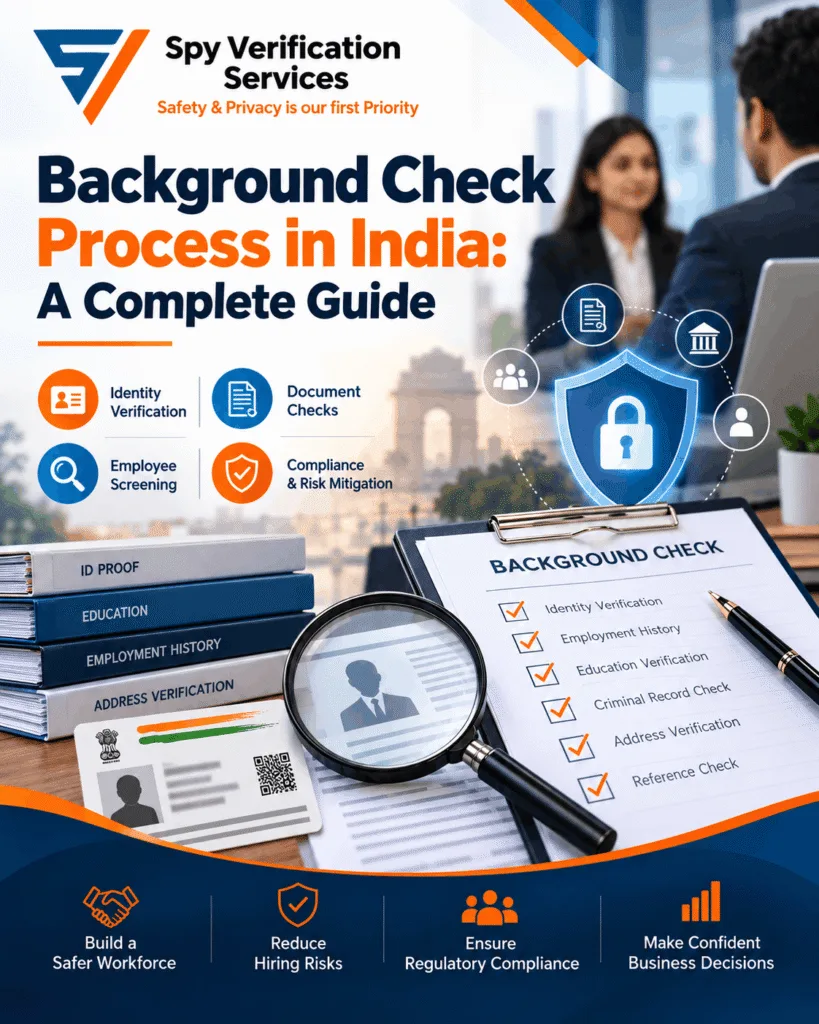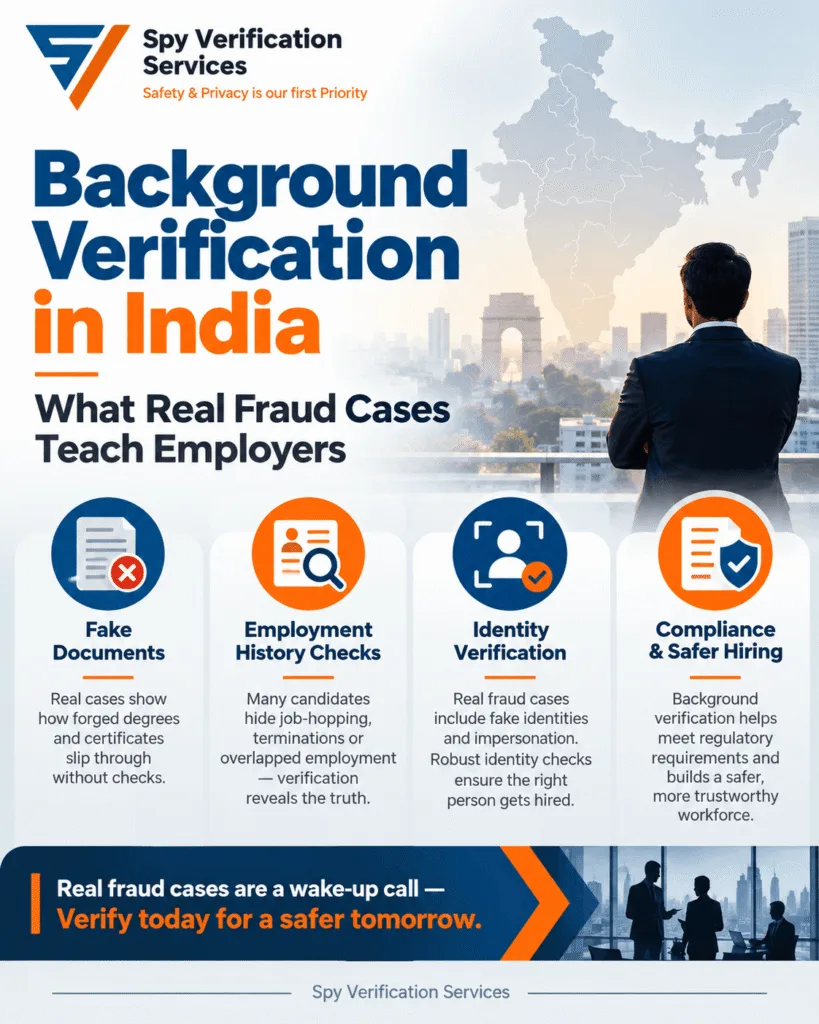
Background verification companies help employers verify the information candidates provide during recruitment and onboarding. Their services may include identity, education, employment, address, criminal record, financial, reference and social media checks.
A reliable background verification partner does more than search for negative information. It establishes a structured process for confirming candidate credentials, identifying material discrepancies and presenting findings in a clear report. This allows employers to make more informed hiring decisions while treating candidates fairly.
Spy Verification Services is an India-based background verification provider established in 2016. According to company-provided figures, it has completed more than 1,500,000 verifications, served over 100 happy clients and built more than 10 years of operational experience.
What Are Background Verification Companies?
Background verification companies are specialised service providers that independently validate a candidate’s personal, professional, educational and other relevant information.
They may contact previous employers, educational institutions, references and authorised sources to verify the accuracy of the submitted information. Depending on the verification package, they may also review identity documents, address records, court information, financial credentials or publicly available professional information.
The terms background verification companies, background screening companies and background verification agencies are frequently used interchangeably. However, verification generally refers to confirming specific information, whereas screening may involve a broader assessment that includes multiple relevant checks.
The purpose is not to search for reasons to reject every candidate. It is to identify whether the information is verified, incomplete, inconsistent, unavailable or materially different from the information presented to the employer.
Why Do Employers Use Background Verification Agencies?
Recruitment decisions are often based on resumes, application forms, interviews and documents supplied by candidates. These sources may occasionally contain incorrect dates, exaggerated responsibilities, unverifiable qualifications or missing employment information.
Professional Background Verification Agencies help employers introduce an independent validation stage into their hiring process.
This may help an organisation:
- Confirm that a candidate is who they claim to be
- Verify educational and professional qualifications
- Validate previous employment and job responsibilities
- Identify significant gaps or inconsistencies
- Protect customers, employees, assets and sensitive information
- Apply more consistent recruitment standards
- Support internal risk-management procedures
- Maintain documented hiring records
A background check does not remove every hiring risk. However, it can provide additional evidence that supports a better-informed decision.
What Services Do Background Screening Companies Provide?
The services offered vary by provider, geography, industry and job role. A comprehensive background screening programme may include the following checks.
Identity Verification
Identity verification confirms whether the candidate’s name, date of birth, photograph and identification details correspond with the documents and information submitted.
Employment Verification
Employment verification may confirm the organisation name, employment period, designation, employee code, reason for leaving or other details available from the previous employer.
Education Verification
Education verification checks whether the educational institution, qualification, specialisation, attendance period and result information are supported by the issuing institution or available records.
Address Verification
Address Verification help confirm whether the candidate’s current or permanent address is valid. Depending on the provider and package, this may be completed digitally, through documents or through physical field verification.
Criminal and Court-Record Verification
This check searches relevant court and criminal record sources based on the candidate’s information and the verification scope. Employers should ensure that such checks are relevant to the position and handled in accordance with applicable requirements.
Professional Reference Checks
Reference checks collect structured feedback from people who have previously worked with or supervised the candidate. They can provide context about responsibilities, conduct, performance and professional relationships.
Financial Verification
Financial checks may be considered for selected positions involving money, credit decisions or significant financial responsibility. They should not be applied indiscriminately to every role.
Social Media and Public-Information Checks
Social media checks examine publicly available information within a defined, job-relevant scope. Screening should avoid irrelevant personal characteristics and focus on legitimate workplace concerns.
Spy Verification Services publicly lists education, employment, identity, address, financial, social media, criminal and court-record verification among its services. It also lists birth, marriage and death certificate services, as well as tax-related verification services.
How Does the Background Verification Process Work?
Although workflows differ among background verification companies, a typical process includes the following stages.
1. Defining the Verification Scope
The employer identifies the checks required for the role. A finance position, driver, healthcare professional and software engineer should not automatically receive identical screening packages.
2. Candidate Information and Authorisation
The candidate receives information about the screening process and provides the required details, documents and authorisation.
3. Document and Source Validation
The verification agency verifies the submitted information against relevant documents, institutions, employers, references, databases, or field sources.
4. Quality Review
Collected information should be reviewed before a final status is assigned. Quality review helps identify incomplete responses, conflicting records or information requiring further clarification.
5. Reporting
The employer receives a report showing which checks were completed and what was found. A well-designed report should distinguish between verified information, minor differences, material discrepancies, pending checks and records that could not be confirmed.
6. Candidate Clarification
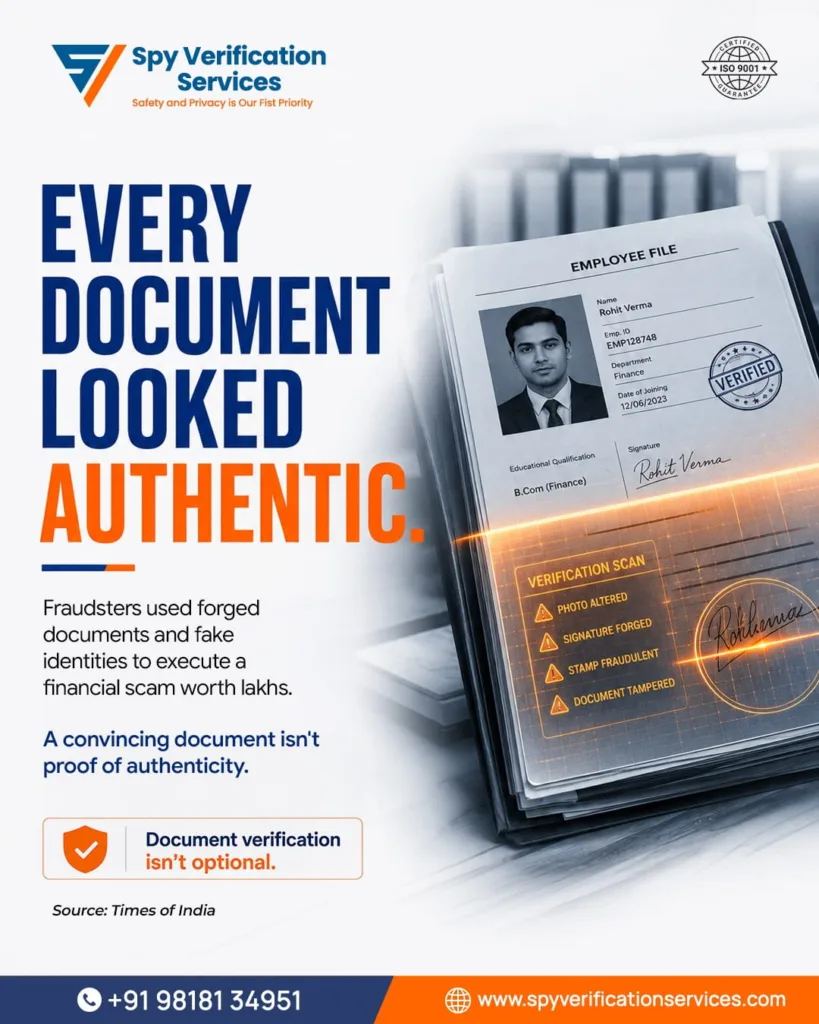
A discrepancy should not automatically be treated as deliberate fraud. Candidates should be given an appropriate opportunity to explain errors, document variations or unavailable records before a final employment decision is made.
How to Choose the Best Background Verification Company
The best provider is not necessarily the one offering the lowest price or the most checks. Employers should compare background verification agencies using consistent and transparent criteria.
Evaluate Its Verification Methods
Ask how information is validated. Determine whether the agency relies on document review, direct institutional contact, authorised data sources, field visits or a combination of methods.
Review Its Service Coverage
Choose a provider capable of supporting the checks, locations, industries and hiring volumes relevant to your organisation. Avoid paying for broad packages that include checks irrelevant to the role.
Assess Data-Security Practices
Background screening involves personal information. Ask how candidate data is transmitted, accessed, retained, protected and deleted. Review the provider’s privacy policy, access controls, confidentiality process and breach response procedure.
Spy Verification Services states that safety and privacy are priorities and maintains website terms that address data collection and compliance with privacy policies.
Examine Report Quality
Request a sample report with personal information removed. It should explain the verification source, finding, status and limitation in straightforward language. A red, amber or green label is not sufficient unless the reason behind the status is clearly explained.
Compare Turnaround Times Realistically
Some identity checks may be completed quickly, while employment, education, court or field verification can depend on third-party responses. Reliable companies should provide estimated turnaround times by check type rather than promise a single timeline for every case.
Check Escalation and Support
Ask who handles delayed checks, institutional non-responses, candidate concerns and contested results. A named account manager or defined escalation process can be valuable during high-volume recruitment.
Consider Technology and Scalability
Large employers may require bulk initiation, dashboards, automated updates, candidate communication, API access or HRMS and ATS integration. Smaller organisations may benefit more from responsive support and flexible packages than advanced integrations.
Verify Experience with Your Industry
A provider serving BFSI, healthcare, manufacturing, logistics or technology clients should understand that the risk profile and documentation requirements differ by sector.
Why Consider Spy Verification Services?
Spy Verification Services has operated since 2016 and provides a range of background verification services to businesses in India. Its publicly listed industry coverage includes manufacturing, BFSI, logistics, healthcare, hospitality, aviation, retail, telecom, IT, BPO and other sectors.
According to internal company figures supplied for this article, Spy Verification Services has achieved:
- 1,500,000+ completed verifications
- 100+ happy clients
- 10+ successful years
Businesses may consider Spy Verification Services when looking for:
- Multiple verification services through one provider
- Pan-India background screening support
- Digital and field-verification capabilities
- Role-based verification packages
- Support for different industries
- Structured screening reports
- Candidate and client assistance
Employers should still request a proposal, a sample report, data security information, a turnaround time matrix and service-level commitments before finalising any provider.
How Should Spy Verification Services Be Compared with Other Companies?
Spy Verification Services should be compared with other background screening companies on measurable factors rather than unsupported claims such as “best” or “number one.”
Create a comparison checklist covering:
- Types of checks offered
- Verification methodology
- Geographic coverage
- Industry experience
- Average turnaround time
- Data-protection controls
- Report clarity
- Technology integrations
- Candidate support
- Escalation procedures
- Pricing transparency
- Client references
Mentioning competitors is not necessary in this guide unless the article provides a fair and useful comparison. A separate article titled “Top Background Verification Companies in India” would be more appropriate for comparing named providers.
Frequently Asked Questions About Background Verification Companies
1. What is a background verification company?
A background verification company validates information supplied by a candidate or employee. It may verify identity, education, employment, address, professional references, court records and other job-relevant details. The company then provides a report to the employer explaining whether the information was confirmed, differed from available records or could not be verified.
2. Are background checks necessary for every employee?
The depth of screening should depend on the position, industry and associated risks. Basic identity, employment and education checks may be relevant for many positions, while financial, licence, driving or detailed court checks may only be appropriate for particular roles. Employers should use proportionate, role-based screening instead of applying every possible check to every candidate.
3. How long do background verification companies take?
The timeline depends on the selected checks and the responsiveness of the sources. Identity or document-based checks may be relatively quick, whereas employment and education checks can take longer if former employers or institutions do not respond promptly. Field checks, court searches and international verification may also require additional time.
4. What happens when a discrepancy is identified?
The agency normally records the difference and its source in the verification report. A discrepancy may result from an incorrect date, a spelling variation, a changed company name, an unavailable institution, an administrative error, or inaccurate information. Employers should review its relevance and allow the candidate to provide clarification before making a decision.
5. What documents are required for employee background verification?
Requirements vary by check. Common documents may include identification, proof of address, educational certificates, marksheets, employment letters, salary records, or professional licences. The verification company should request only the documents required within the authorised screening scope and clearly communicate the requirements to candidates.
6. How much do background verification services cost?
Pricing depends on the number and complexity of checks, hiring volume, geographical coverage, technology requirements and turnaround expectations. Employers should request an itemised quotation to understand the cost of each check. The cheapest package may not provide the required verification depth, support or reporting quality.
7. How can an employer determine whether a background verification agency is trustworthy?
Review the provider’s legal identity, office information, privacy documents, verification methodology, data-security practices, client references and sample reports. Ask how discrepancies are handled, how long data is retained and who can access candidate information. Providers should be willing to explain their process rather than relying only on marketing claims.

Conclusion
Background verification companies play an important role in helping employers validate candidate information and create more consistent hiring processes. The right partner should combine accurate verification methods, appropriate checks, secure data handling, transparent reporting and responsive support.
When comparing background verification agencies, focus on relevance, methodology, security, turnaround time, report quality and industry experience. Spy Verification Services offers a broad portfolio of screening services and reports more than 1.5 million verifications, serving over 100 clients and backed by more than 10 years of experience.
Before beginning a screening programme, request a role-based proposal and confirm the checks, process, expected timelines, data-handling practices and reporting format.
Looking for a structured employee background verification solution? Contact Spy Verification Services to discuss your hiring volume, job roles and required verification checks.