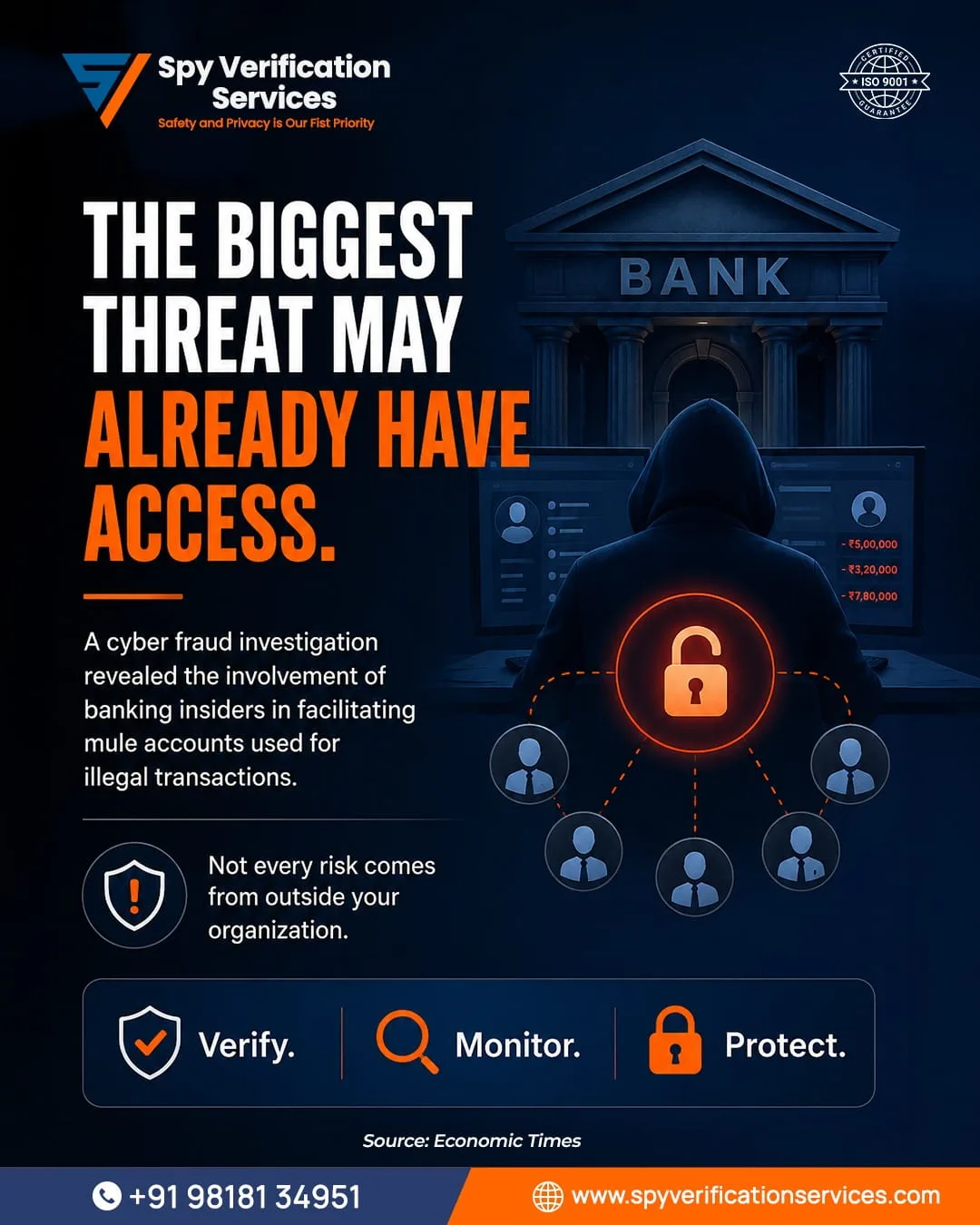
Hiring decisions are often made based on information provided by the candidate.
A resume lists employment history. Certificates show qualifications. Identity documents establish who the person claims to be. References provide another layer of information.
But an important question remains:
Has the information actually been verified? That is the role of professional Background Check Companies.
Background verification is not about assuming that every candidate is dishonest. It is about independently verifying job-relevant information so employers can make decisions based on verified facts rather than assumptions.
For organizations hiring at scale, handling sensitive data, managing financial responsibilities, or granting employees access to critical systems, professional Background Check Services can be an important part of recruitment and risk management.
Spy Verification Services, established in 2016, provides structured background verification across India. The company currently reports more than 10 years of operating experience, 100+ clients and over 1.5 million verifications, with verification support across metros, Tier II and Tier III cities and many remote locations.
What Do Background Check Companies Do?
Background Check Companies verify information supplied by candidates, employees, or other individuals through relevant and appropriate sources.
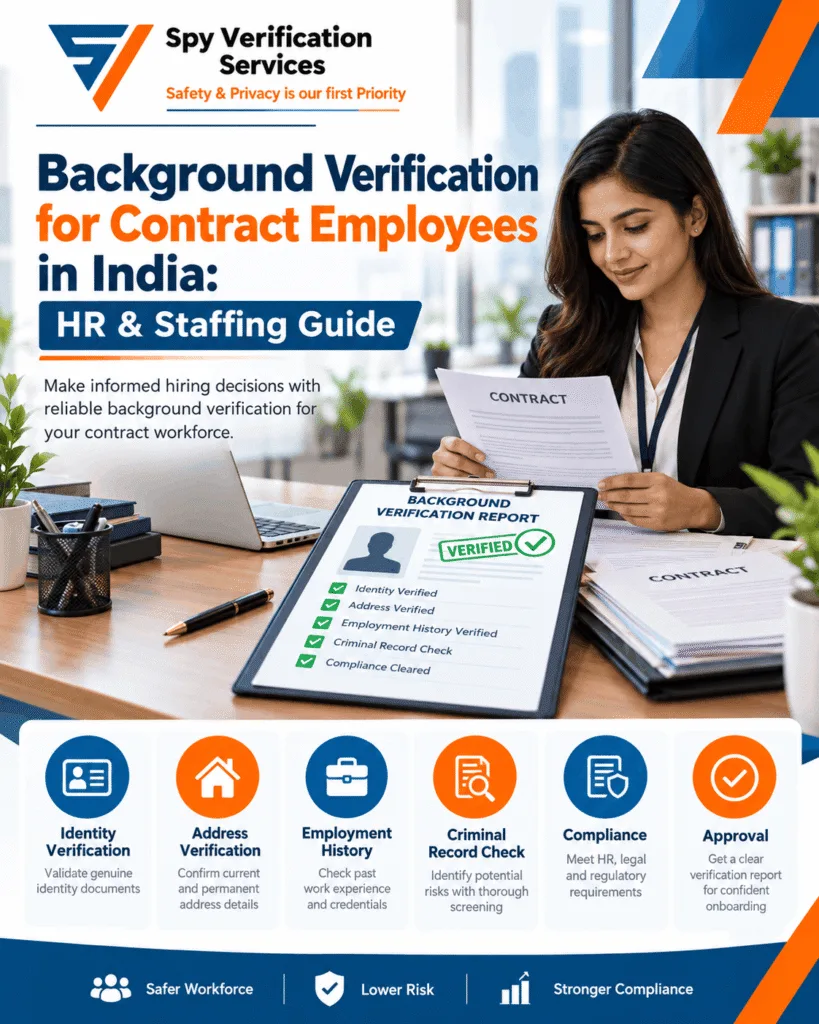
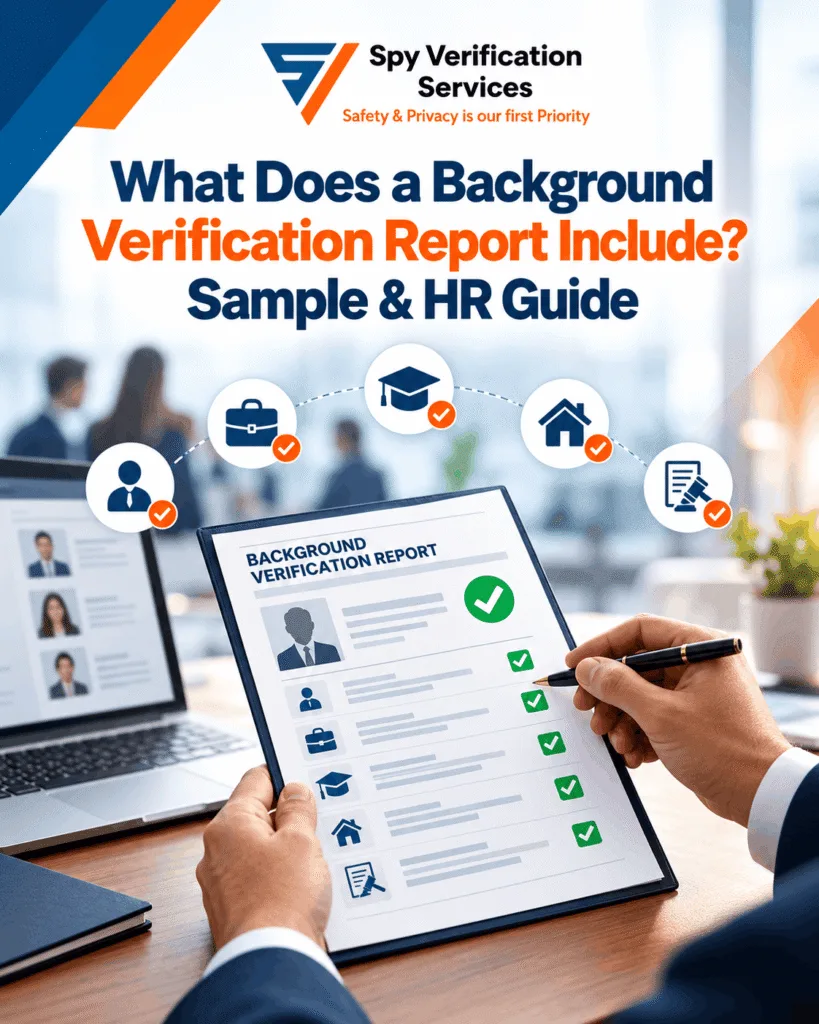
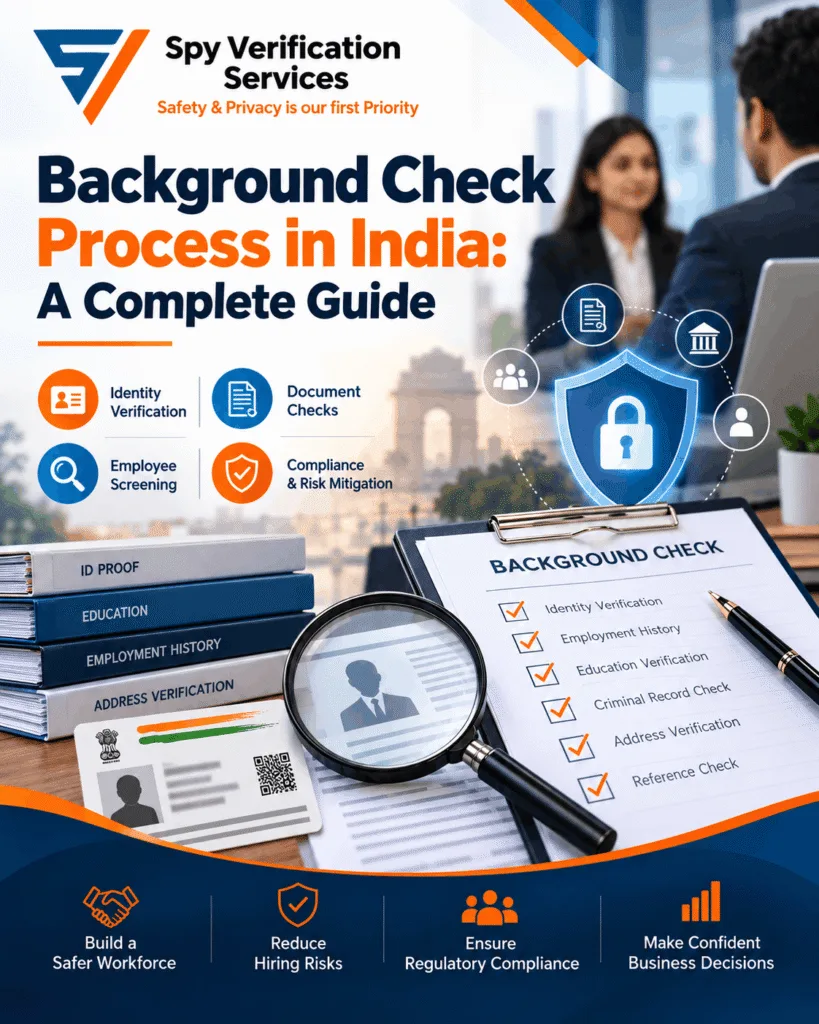
Depending on the role and purpose, Background Check Verification may include:
- Identity verification
- Employment verification
- Education verification
- Address verification
- Criminal and court-record checks
- Professional reference checks
- Financial verification for appropriate roles
- Social media screening within a defined scope
- Certificate and document verification
The purpose is not to collect as much information as possible.
The purpose is to verify information that is relevant to the decision being made.
That difference is important.
Why Resume Screening Is Not the Same as Background Verification
A resume tells an employer what a candidate says about their career.
Background verification asks whether relevant claims can be independently confirmed.
Consider this example.
A candidate writes:
Senior Operations Manager
ABC Pvt. Ltd.
January 2022 – March 2025
A recruiter can review that experience during an interview.
A professional employment verification process can go further and attempt to confirm:
- Whether the employer exists
- Whether the candidate worked there
- The recorded employment period
- The designation available from the employer
- Other employment information that the source is authorized to provide
This is why Employee Background Verification Companies serve a different purpose from recruitment agencies.
Recruiters assess suitability.
Background verification providers assess the verifiability of relevant information.
What Experience Has Taught the Background Verification Industry
One of the most important lessons from real verification work is that a discrepancy is not automatically proof of fraud.
Records can be incomplete.
Companies close.
Employees change names.
HR systems can contain old information.
Universities may take time to respond.
A candidate may remember an employment date incorrectly by a few weeks.
That is why professional verification requires more than automated red or green flags.
At Spy Verification Services, the publicly described verification process separates confirmed information, differences, unavailable information and source limitations so that an employer can review the findings more fairly.
This distinction becomes particularly important when a verification result could influence someone’s employment.
How Background Check Verification Works at Spy Verification Services
A structured verification process usually starts before any record is checked.
According to the process published by Spy Verification Services, the workflow follows five main stages.
1. Scope and Purpose
The first question should not be:
“What can we check?”
It should be:
“What needs to be checked for this particular role?”
A software engineer, delivery partner, accountant and healthcare employee may require different scopes of verification.
Role-based screening helps prevent unnecessary checks while focusing resources on information relevant to the position.
2. Information and Authorization
Required candidate information, supporting documents and appropriate authorization are collected.
Organizations should avoid collecting information simply because it is available.
Background screening involves personal information. That makes purpose limitation, responsible handling and access control important parts of the process.
India’s Digital Personal Data Protection Rules, 2025, were notified on November 14, 2025, alongside the framework for implementation of the Digital Personal Data Protection Act, 2023. Businesses processing personal information should therefore understand their obligations and obtain legal advice appropriate to their specific circumstances.
3. Source-Led Verification
The relevant information is checked through appropriate sources.
Depending on the verification, this may involve:
- Previous employers
- Educational institutions
- Authorized databases
- Court or record sources
- Documents
- Field resources
- Other relevant verification channels
The source used should match the information being verified.
4. Quality Review
The findings are reviewed for completeness, consistency and material differences.
This stage matters because raw information can be misleading.
A simple name match, for example, may not be enough to establish that a court record belongs to a particular candidate.
Similarly, failure to receive an employment response does not automatically establish that employment never occurred.
5. Clear Reporting
The final report should tell the employer:
- What was verified
- What was confirmed
- What differed
- What could not be verified
- What limitations existed
This makes the report useful for decision-making without pretending that every verification produces absolute certainty.
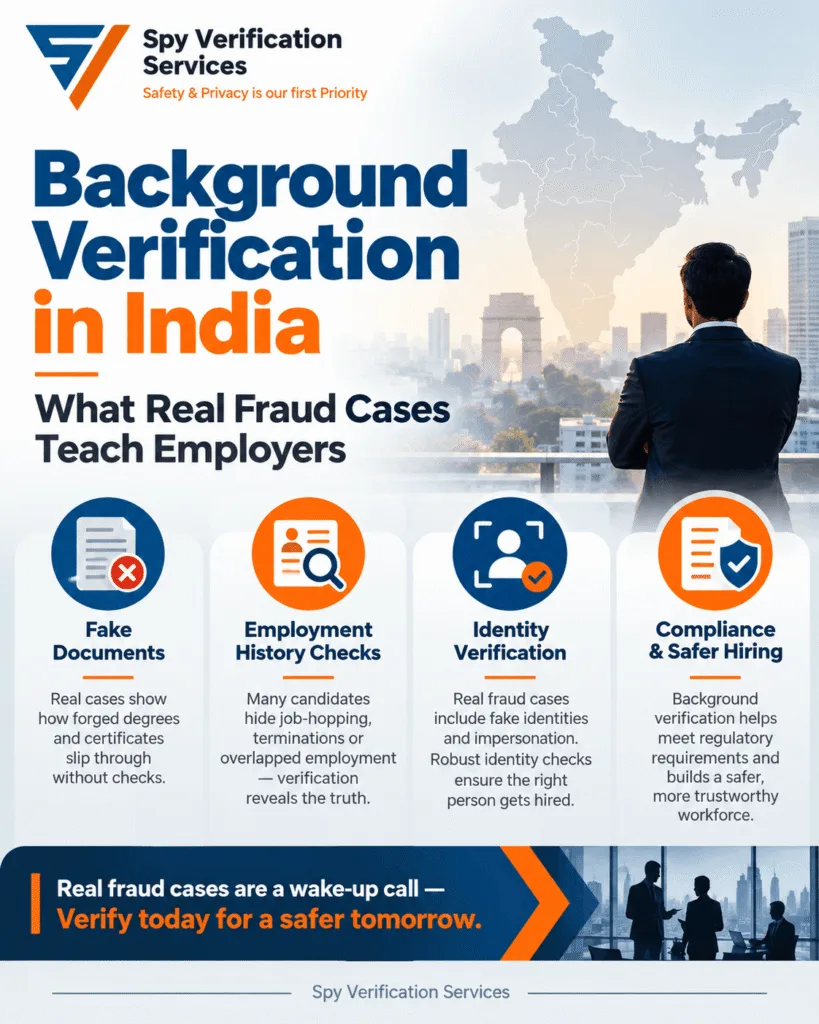
Real Case Study 1: Fake IB Officer and a ₹15 Lakh Job Fraud
A real case reported by The Times of India demonstrates why independent verification matters even when a process appears official.
What Happened?
A chemical engineer in Bhopal was allegedly deceived by individuals who promised him a senior position in a fictitious organization called “Quality Inspection of India.”
According to the report, the victim eventually paid approximately ₹15 lakh in connection with the promised position.
The scheme became even more convincing when a man arrived claiming to be an Intelligence Bureau officer and conducted what appeared to be an official background verification.
But something felt wrong.
A friend of the victim independently checked the supposed officer’s credentials through an IB contact.
The ID was found to be fake.
The impersonator fled, was later caught and handed over to the police. Misrod Police registered the case.
Background Verification Lessons
This case highlights three important checks:
Identity Verification
A uniform, ID card, designation, or official-sounding title should not replace independent confirmation of identity.
Government Employment Verification
Claims of association with a government department or agency should be verified through appropriate sources.
Employer Verification
The organization offering the position should itself be independently checked.
Key Lesson for Employers and Job Seekers
Background verification is useful only when the source being relied upon is genuine.
A fake verification performed by a fake officer can actually make fraud appear more legitimate.
Independent verification breaks that chain.
Real Case Study 2: Alleged Vehicle Fitness Certificate Database Scam
A second case shows why verification should not always end after a candidate joins an organization.
In July 2026, The Times of India reported that the Beed Police Special Investigation Team arrested a 32-year-old software engineer from Noida in connection with an alleged pan-India vehicle fitness certificate racket.
What Happened?
Police alleged that fraudulent vehicle fitness certificates were being issued without vehicles undergoing mandatory physical inspection.
The arrested engineer worked on transport department software projects through a vendor empanelled with National Informatics Centre Services Incorporated.
According to investigators, his work allegedly gave him substantial knowledge of the software, source code and database architecture.
Authorities were investigating whether technical vulnerabilities, authentication bypasses, unauthorized database changes and possible concealment from routine audits were involved.
The investigation was ongoing at the time of reporting, so allegations should not be treated as a final determination of guilt.
Background Verification Lessons
The case raises issues beyond traditional pre-employment screening.
Employment Screening
Organizations should understand the background and suitability of people placed in sensitive technical positions.
Access Control
A verified employee should still receive only the system access genuinely required for their role.
Continuous Verification
Risk does not disappear after onboarding. Employees may move into new positions, receive broader privileges, or gain access to more sensitive systems.
Key Lesson
A background check is not a substitute for cybersecurity, access governance, or monitoring.
It is one layer within a broader risk-management framework.
That distinction is important for both employers and Employee Background Screening Companies in India.
What Should Background Check Companies Actually Verify?
There is no universal background check suitable for every employee.
Good screening should reflect the responsibilities and risks associated with the role.
Identity Verification
Identity verification helps establish that the individual corresponds with the identity information and documentation supplied.
Because many other checks depend on correct identity matching, this is often a foundational step.
Employment Verification
Employment verification can help confirm information such as:
- Previous employer
- Employment period
- Position or designation
- Other information made available by an authorized employer source
This becomes especially important when previous experience determines seniority, compensation, or eligibility for a role.
Education Verification
Education verification can confirm available information regarding:
- Institution
- Qualification
- Course
- Completion
- Passing year
For positions requiring specific academic or professional credentials, this may be an essential check.
Address Verification
Address verification helps determine whether the supplied address information can be reasonably validated through an appropriate digital, documentary, or field-based method.
Criminal and Court-Record Verification
For appropriate roles and subject to applicable requirements, relevant court or criminal record searches may form part of the screening process.
These checks require careful identity matching.
A person should never be treated negatively simply because another individual with a similar name appears in a record.
Financial Verification
For roles involving significant financial responsibility, an authorized financial check may sometimes be relevant.
Such screening should have a legitimate role-related purpose and appropriate authorization.
Pre-Employment Screening Is Only One Part of Verification
One mistake businesses can make is treating background verification as a one-time onboarding exercise.
Risk changes over time.
An employee originally hired for a junior technical role may later receive administrator access.
A finance employee may become responsible for larger transactions.
A driver may begin handling higher-value assets.
An employee may move into a position involving confidential customer information.
This is why organizations should consider continuous or periodic verification when justified by the role and permitted by applicable requirements.
The second real case above demonstrates why access privileges, technical responsibilities and ongoing risk controls matter after hiring.
Why Businesses Use Employee Background Verification Companies
An internal HR team can perform some checks.
However, verification becomes difficult to manage as hiring volume increases.
Suppose a company hires 200 people and requires four checks per candidate.
That can involve up to 800 individual verification activities.
Each one may involve different:
- Sources
- Documents
- Response times
- Escalations
- Geographic locations
- Discrepancies
Specialized Background Check Companies help organizations create a more consistent process for handling this workload.
The advantage is not simply speed.
It is structure, documentation, escalation and consistency.
What Makes a Reliable Background Check Company?
Businesses comparing Background Check Services should look beyond claims such as “fastest,” “best,” or “most accurate.”
Ask how the work is actually performed.
Look for a Clear Methodology
A provider should explain:
- What is being checked
- How will it be checked
- Which information is required
- What limitations may exist
Look for Source Transparency
A report should distinguish between information confirmed by a source and information that could not be obtained.
“Unable to verify” and “false” are not automatically the same finding.
Look for Human Review
Automated systems can accelerate verification.
They cannot resolve every ambiguity.
Human review remains valuable when:
- Names match multiple records
- Dates differ
- Documents conflict
- Employers are unavailable
- Institutions have changed
- Findings require context
Look for Candidate Correction Processes
Spy Verification Services publicly provides a process through which candidates can question or seek correction of verification findings that are incorrect or incomplete by submitting relevant details and supporting documents.
That is an important trust signal because verification should be reviewable.
Look for Responsible Data Handling
A provider should have clear practices around:
- Data access
- Collection
- Purpose
- Storage
- Protection
- Retention
- Correction
- Disposal
Privacy should not be treated as a marketing slogan.
It should be part of the operating process.
Why Spy Verification Services Fit This Framework
Spy Verification Services states that it has been operating since 2016 and verifies in India.
Its current publicly reported milestones include:
- 10+ years of operating experience
- 100+ clients
- 1,500,000+ verifications
- Pan-India operational reach
These are company-reported figures and should be understood as such.
Its service scope includes areas such as:
- Education verification
- Employment verification
- Identity verification
- Address verification
- Criminal and court records
- Authorized financial checks
- Social media screening
- Taxation-related verification
- Certificate verification
More importantly, the company’s published process emphasizes role-based scope, authorization, source-led verification, quality review, clear reporting and acknowledgement of source limitations.
That methodology is more meaningful than simply offering a long list of checks.
Questions to Ask Before Choosing Background Check Companies
Before selecting a provider, ask:
- How do you conduct each type of verification?
- Which sources do you use?
- How do you distinguish discrepancies from inconclusive results?
- What authorization is required?
- How do you protect personal information?
- What happens when a candidate disputes a finding?
- Can checks be selected according to the role?
- How do you handle employers or institutions that are unavailable?
- Does a human reviewer examine complex cases?
- What information appears in the final report?
- What factors affect turnaround times?
- Do you support verification across the locations where we hire?
The answers can reveal far more about a provider than promotional claims alone.
Frequently Asked Questions
What are Background Check Companies?
Background Check Companies are specialist organizations that independently verify job- or business-relevant information, such as identity, employment, education, address and other permitted records.
What are Background Check Services?
Background Check Services are structured verification activities used to confirm information provided by candidates, employees, vendors, or other individuals for a legitimate business purpose.
What is Background Check Verification?
Background Check Verification is the process of comparing a person’s information with information available from appropriate independent sources.
Why do companies conduct employee background verification?
Organizations use employee background verification to confirm candidate information, identify material discrepancies, improve hiring consistency and support better-informed employment decisions.
Does a discrepancy mean a candidate committed fraud?
No.
A discrepancy means that information from one source differs from information supplied or obtained elsewhere.
It should be reviewed in context.
Unavailable records, administrative errors, or innocent differences can sometimes explain inconsistencies.
Should employee verification continue after hiring?
For some sensitive roles, periodic or continuous verification may be appropriate when there is a legitimate need and applicable requirements are followed.
However, ongoing background verification should complement-not replace-access controls, cybersecurity, supervision and internal governance.
How long does a background check take?
There is no universal timeframe.
Spy Verification Services states that turnaround time can vary depending on the type of check, location, source response and record availability.

Final Thoughts
The most useful question in background verification is not:
“How much information can we find about this person?”
It is:
“What information matters for this role and can we verify it fairly and independently?”
The fake IB officer case demonstrates how convincing fraud can appear when credentials are not independently verified.
The alleged vehicle fitness certificate case demonstrates something different: pre-employment screening alone cannot manage every future risk. Access control, ongoing governance and proportionate continuous verification may also matter for sensitive positions.
Together, these cases show why professional Background Check Companies need to do more than collect records.
They need a process.
That process should combine relevance, independent sources, appropriate authorization, careful handling of discrepancies, human judgment, privacy protection and clear reporting.
For organizations evaluating Background Check Services, Background Check Verification, or Employee Background Verification Companies, those qualities should matter more than exaggerated promises.
At Spy Verification Services, the goal of a professional verification process should not be to make assumptions about candidates.
It should provide employers with clearer, better-supported information so they can make their own fair and informed decisions.
Better hiring does not begin with suspicion.
It begins with verification.