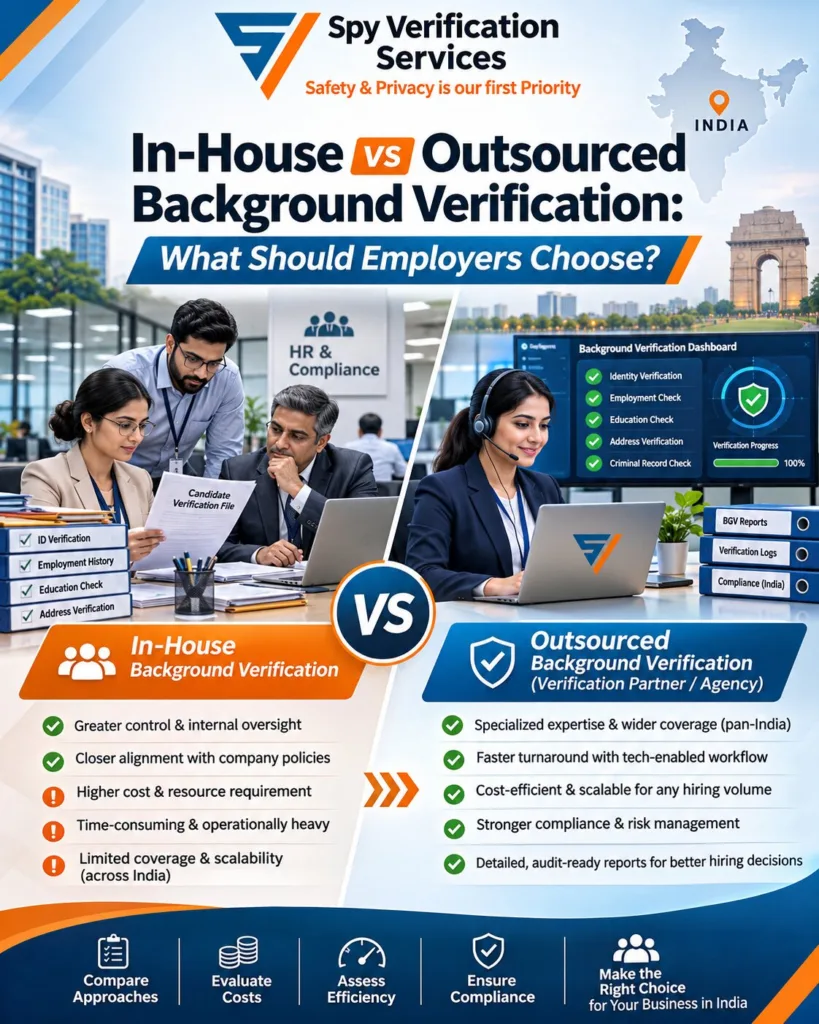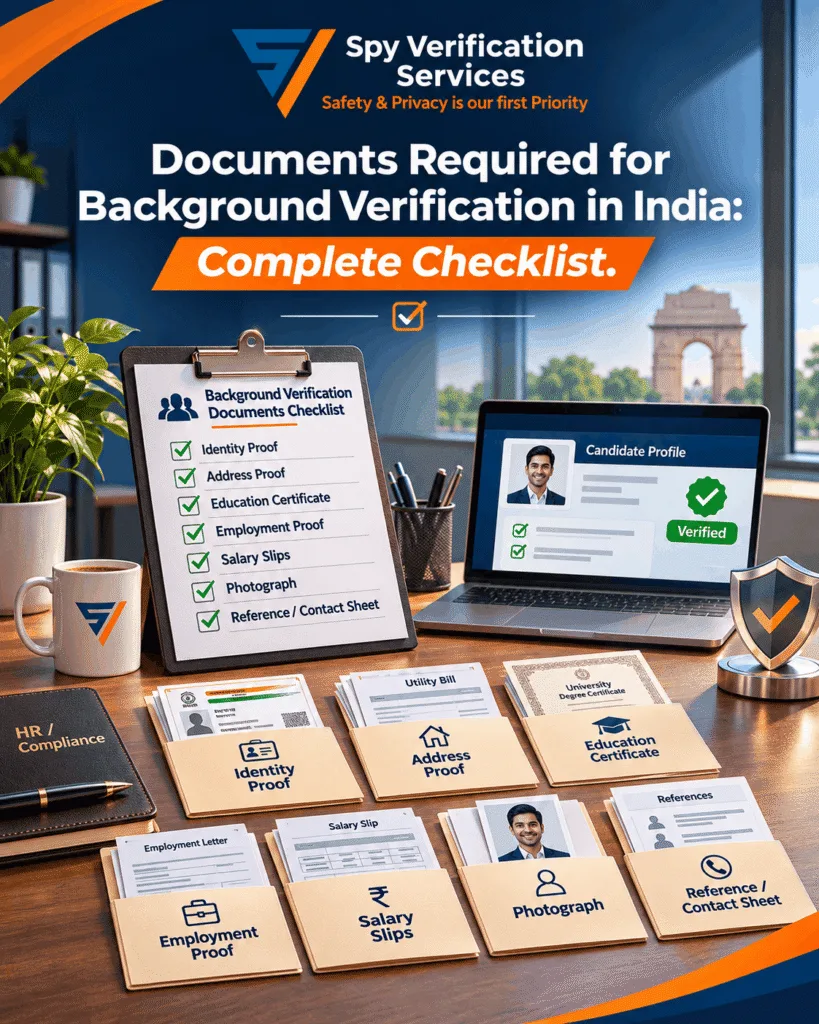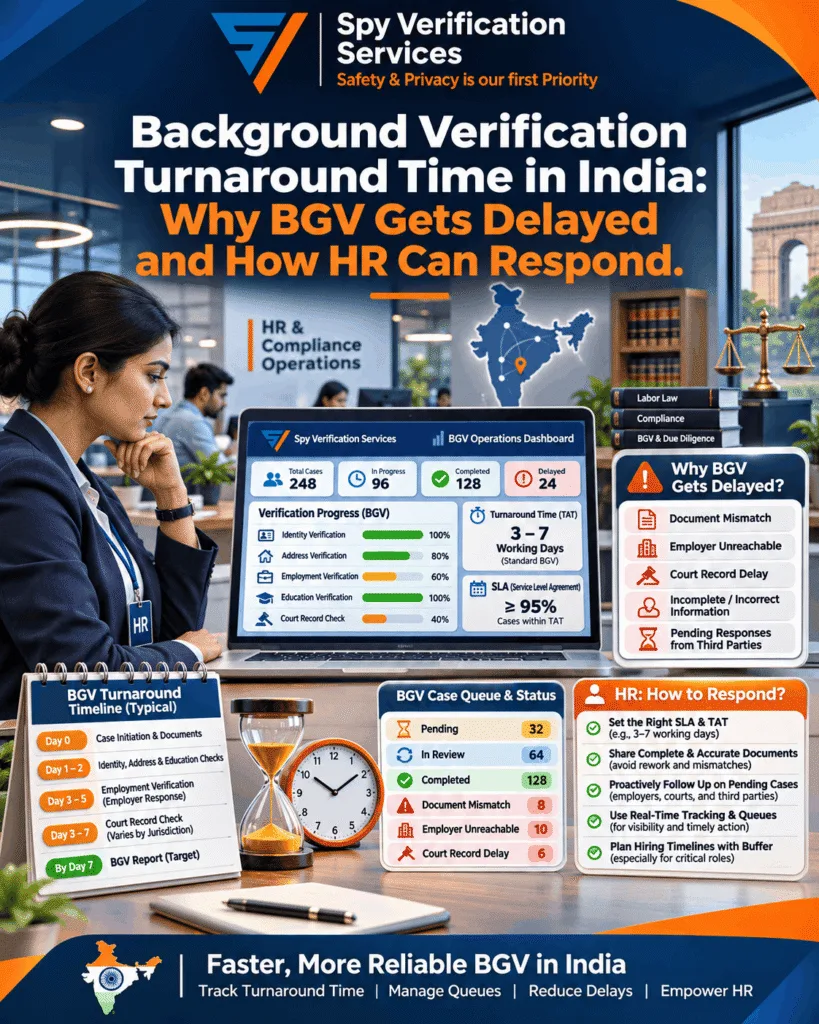
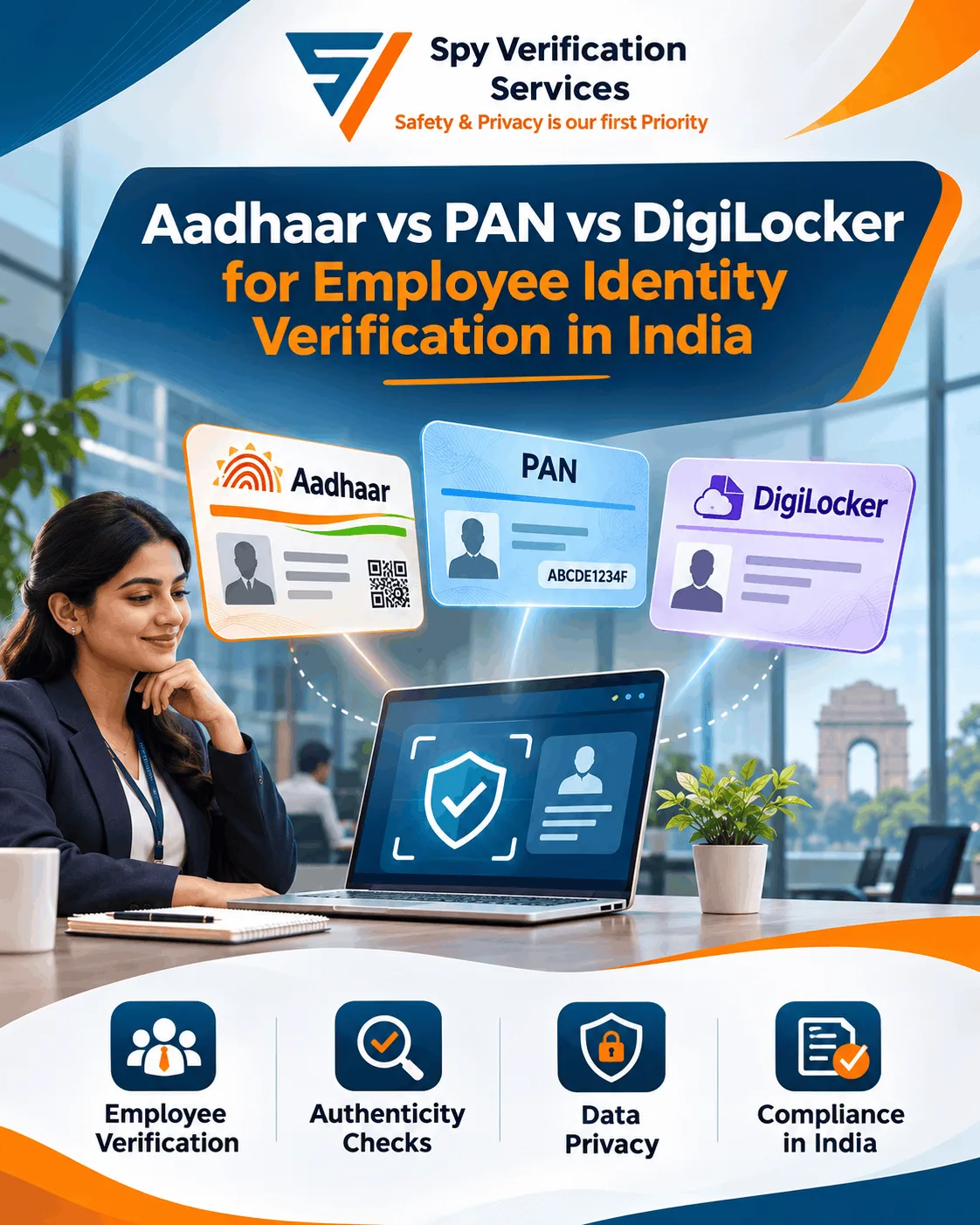
An Indian employer is onboarding a new employee. The name on the applicant’s PAN is written in full, while the Aadhaar record uses initials. The employee shares an academic certificate from DigiLocker. HR now faces three different questions: are the documents authentic, do the records belong to the same person and which of them establishes the information required for the job?
These are separate questions. The purpose of employee identity verification is not to collect every identification record available. It is to establish necessary identifying information through an appropriate route and resolve material discrepancies fairly.
Quick answer: Aadhaar can support identity verification through applicable UIDAI-recognized methods; PAN can help validate tax identity details and status; DigiLocker is a digital-document ecosystem that enables access to and sharing of issuer-provided records. They are not interchangeable. The right choice depends on the specific information needed, lawful access, the available document and the employer’s approved screening scope. None alone verifies a candidate’s entire employment history, suitability or character.
Spy Verification Services offers Identification Verification Services as part of broader employee screening enquiries. This guide compares the evidence methods, practical limitations and safeguards that employers should consider before collecting candidate identity information.
Aadhaar, PAN and DigiLocker: what is the difference?
Before choosing a method, distinguish the document itself from the system through which its information is validated. Aadhaar is an identity number issued under India’s Aadhaar framework. PAN is a tax-related identifier administered by the Income Tax Department. DigiLocker is a platform through which people can access and share digital documents, including records issued by participating bodies.
| Evidence option | Main purpose in onboarding | What it cannot establish by itself |
| Aadhaar | Support identity information through an applicable lawful verification method | Citizenship, domicile, complete employment history or current residence in every case |
| PAN | Validate tax identity details and PAN status through appropriate services | Every identity claim, work history or overall employment suitability |
| DigiLocker issuer-provided record | Support verification of a particular credential from its issuer | Any fact not represented in the specific verified record |
| Candidate-uploaded digital file | Provide a supporting document for examination | Independent issuer confirmation merely because it is uploaded |
An employer may need a PAN for a legitimate tax or payroll purpose, a separate identity verification method and a particular educational qualification. These requirements should not be collapsed into one “verified employee” status. Each item answers a different question.
What is Aadhaar verification for employees?
Aadhaar-related identity verification involves an applicable process for examining or confirming identity information using Aadhaar under the relevant statutory framework. The existence of a number or a copy of a card does not give an employer permission to access all information held by UIDAI.
Authentication versus offline verification
UIDAI distinguishes authentication through authorized entities from offline verification routes. Authentication involves an applicable authorized process under the regulatory framework; it should not be represented as an unrestricted service available to any private recruiter. Offline verification uses recognized mechanisms to establish relevant information without treating a photocopy as independent confirmation.
For example, the Aadhaar secure QR code provides a way to check relevant digitally signed information through an appropriate verification mechanism. An image of an Aadhaar letter should not be accepted as authenticated merely because it displays a QR code. The applicable validation process matters.
The UIDAI regulations page includes the Aadhaar (Authentication and Offline Verification) framework and the December 2025 amendment. The amended Aadhaar authentication and offline verification regulations identify specific verification methods and conditions. The 5 November 2026 government update reports that UIDAI had onboarded 300 Offline Verification Seeking Entities (OVSEs) since the January rollout. That number is a reported adoption figure, not evidence that any particular screening vendor is registered or authorized.
Consent, alternatives and the limits of outsourcing Aadhaar checks
For voluntary Aadhaar verification, regulations 5 and 6 require the relevant entity to explain the information involved, its proposed use and viable identification alternatives, then obtain the holder’s consent. The rules address nondiscrimination against someone who cannot or declines to undergo the process but can identify themselves through an acceptable alternative. Section 4 of the Aadhaar Act recognizes specific statutory exceptions where authentication is mandated by parliamentary law.
Regulation 16A restricts an OVSE to the purpose communicated to the holder and prohibits offline verification on another entity or person’s behalf. Under section 8A of the Aadhaar Act, offline verification-seeking entities are also restricted from collecting, using or storing Aadhaar numbers or biometrics. This is why an employer must not assume that a normal background-verification contract permits a supplier to perform the employer’s Aadhaar offline check. Seek qualified advice on the exact roles and verification route before implementation.
A practical choice may be another accepted identity credential or a verification route the employer is lawfully entitled to use. Do not describe a consent form, an API subscription or a vendor’s registration as a blanket exemption from these restrictions.
What Aadhaar can and cannot prove
An appropriate Aadhaar verification result can support relevant identity information represented through the chosen method. It is not a general certificate of employment fitness, and it does not verify a degree or prove that a candidate held a particular job.
Section 9 of the Aadhaar Act, 2016 also makes clear that Aadhaar alone does not establish citizenship or domicile. Do not treat an address recorded with an Aadhaar credential as conclusive evidence of where someone currently lives. If current residence is relevant, define a separate appropriate address check.
Is Aadhaar mandatory for employee background verification?
There is no universal rule requiring all private employers to use Aadhaar for every employee screening purpose. The applicable law, specific purpose and available verification arrangements matter. For ordinary voluntary use, explain appropriate alternatives and comply with the applicable non-denial safeguards; do not insist on Aadhaar simply because the document is familiar. Particular statutory or payroll requirements may be different from a general identity screening request.
Seek appropriate advice before establishing a mandatory collection rule. Where an alternative accepted identity record meets the screening purpose, a candidate should have a clear route to use it under applicable requirements.
What is PAN verification in employee onboarding?
The Permanent Account Number is relevant to tax identification. Employers may require PAN information for a lawful payroll or related administrative purpose, but the document also provides certain identifying information that may be useful when appropriately checked.
What an official PAN verification service confirms
The Income Tax Department’s Verify Your PAN guidance explains that the service can check whether relevant submitted details, such as name and date of birth, match PAN records and whether the PAN is active. The department also distinguishes ordinary verification from bulk PAN/TAN verification, which is subject to approval requirements for external agencies. Its PAN user manual specifies different routes for individual users and registered external agencies. The result should be recorded as the PAN details and status actually checked, not as a complete identity or employment-history clearance.
A provider should not imply that it has direct or bulk access to government data unless that capability is genuinely authorized and applicable. Employers should ask whether their proposed method validates a field, verifies the status or merely examines an image of the card.
What PAN does not establish
A successfully validated PAN does not confirm the applicant’s previous job title, degree, address history or right to perform a regulated occupation. A person presenting a legitimate PAN record must also be appropriately associated with the relevant identity. That is a separate concern from the status of the number itself.
If a PAN record uses a name format that differs from another record, review the actual difference. Some applicants have a single name, initials or spelling variations. A verification process should record whether the discrepancy can be explained without collecting unrelated personal records.
How does DigiLocker verification work for employee screening?
DigiLocker allows people to access, store and share digital documents. For employers, the important distinction is whether a document was issued through the system by the relevant participating institution or uploaded by the account holder.
Issued documents versus uploaded documents
The official DigiLocker FAQ distinguishes records issued directly through integrated issuing bodies from files uploaded by users. A user-uploaded PDF can still be useful as supporting material, but its placement in DigiLocker does not automatically establish issuer authenticity.
The DigiLocker security architecture explains the role of issuers and requesters, including issuer digital signatures. An employer should understand the actual source and validation process used for the presented record rather than relying only on a screenshot with a DigiLocker heading.
Is a DigiLocker document equivalent to the physical original?
Issuer-provided records in the DigiLocker ecosystem have recognition under the applicable Digital Locker rules. The National Academic Depository’s official explanation describes the status of issued documents under Rule 9A of the relevant 2016 rules and explains how participating academic institutions issue digital awards. This does not turn every personal upload or copied screenshot into an issuer-provided original.
For verification, identify the record’s issuer, ensure the sharing or verification method is appropriate and validate the fields that matter. Confirm whether the particular recipient or regulatory context imposes additional requirements. Older or unavailable records may require another source route.
Is DigiLocker only for identity documents?
No. The platform may provide access to many types of issuer-provided records, depending on participating issuers. For employee screening, a driver’s credential, relevant academic award or other appropriate document may answer a specific job-related question. The actual record matters; DigiLocker is not itself a single employment background check.
For academic qualifications, see our Education Verification Services. For checking professional experience, use our separate Employment Verification Services.
Aadhaar vs PAN vs DigiLocker: an employer’s decision matrix
The following framework is intended to help an HR team choose evidence based on the question it actually needs answered. The possible routes are illustrative and subject to lawful access, applicable regulations and the organization’s accepted methods.
| Employer question | Possible evidence route | Additional review needed |
| Does the PAN match the declared details and have active status? | Appropriate Income Tax PAN verification service | Associate the record with the candidate and resolve inconsistencies |
| Can relevant identity information be validated using Aadhaar? | Applicable authorized authentication or permitted offline route | Confirm eligibility, purpose, required authorization and alternatives |
| Was this driving credential issued by the relevant authority? | Appropriate issuer-provided document or authorized source check | Check relevant validity and role-specific requirements |
| Was this degree awarded to the applicant? | Issuer-provided academic award or suitable institution confirmation | Confirm the correct credential, awarding body and candidate match |
| Does the person currently reside at the declared address? | Agreed address verification method | Assess the address’s current relevance; ID address alone may be insufficient |
| Does the person have the experience claimed? | Employment verification through appropriate sources | Verify employer, period and other agreed work-history fields |
The most reliable choice is the evidence appropriate to the fact being checked. Requesting PAN, Aadhaar and a DigiLocker upload for every field can add complexity without resolving the employer’s actual question.
What should the verification report actually record?
HR can use the following original reporting framework to avoid one generic “ID clear” result. It describes output categories, not an operational integration or authorization held by Spy.
| Evidence reviewed | Record the result as | Do not claim solely from this result |
| PAN status service | Relevant name and date fields and reported status, within scope | Candidate’s full work history |
| Permitted Aadhaar verification | The specific identity fields supported by the lawful method | Citizenship, current residence or full employee suitability |
| Issuer-provided DigiLocker degree | Issuer and material award details actually validated | Authority to work in a regulated occupation unless separately established |
| Candidate-uploaded file | Supporting document received and reviewed | Independent confirmation merely because the file is in DigiLocker |
Use a reference or case identifier instead of storing unnecessary identity values in a report. Record the actual method and limitations, date of review and responsible reviewer. Where the law restricts retention or disclosure of particular data, those restrictions take precedence over this general reporting suggestion.
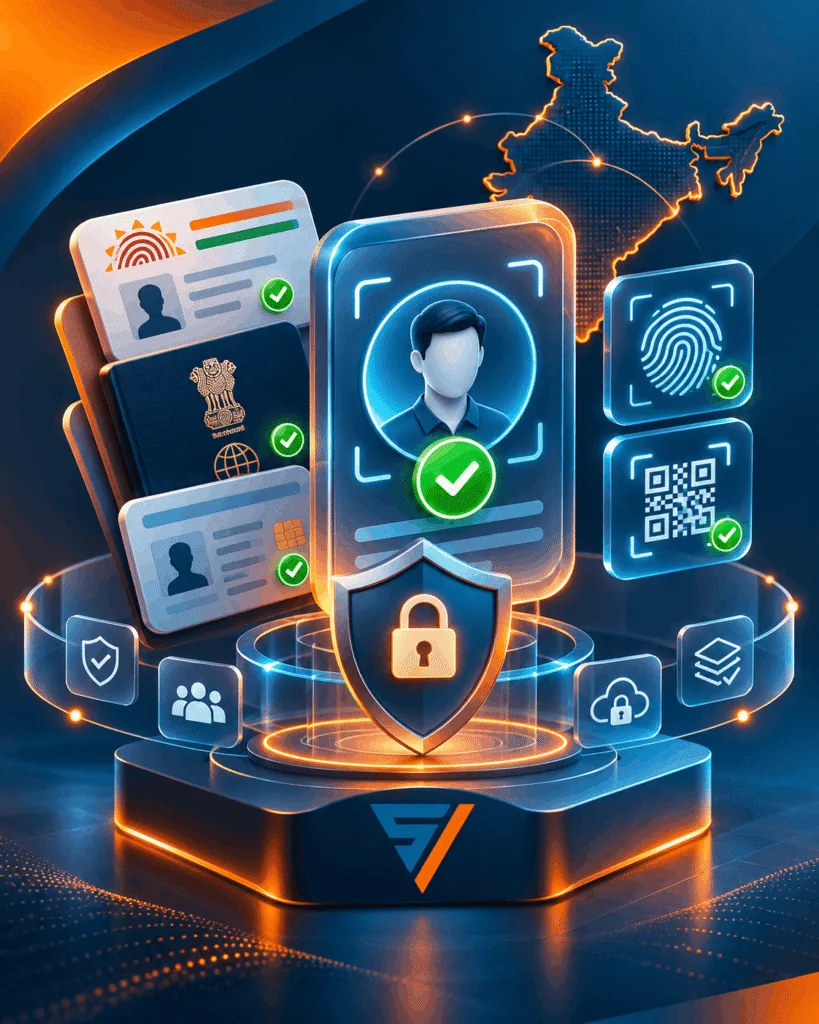
Four layers of a reliable identity verification result
A useful identity check distinguishes several layers of assurance. This is an original explanatory framework, not a statutory classification or a proprietary Spy product.
Layer 1: Document presence
The candidate has provided information or a record. Intake staff can identify the document type and whether it is readable. This stage does not establish authenticity or that the record belongs to its presenter.
Layer 2: Issuer or record validation
The appropriate method may confirm that relevant fields are supported by an authorized source or that an issuer’s digital signature is valid. Record exactly what was validated. A successful source check of a PAN status, for example, should not be reported as independent confirmation of all other documents.
Layer 3: Holder association
The process must appropriately associate the verified information with the relevant applicant. Name, date of birth and other necessary identifiers may help, depending on the legitimate purpose. Do not claim that a photograph, a document number or a superficial name match alone proves identity in every case. Any further method must be lawful, proportionate and actually available.
Layer 4: Role-specific verification
After identity has been appropriately established, other checks answer distinct hiring questions. A degree, driving credential or work history should be examined using an appropriate separate route where relevant. An identity result is an input to the wider screening process, not confirmation of everything in the resume.
What should HR do when names or dates do not match?
Identity information may vary between records for ordinary reasons. Indian naming conventions, initials, spelling variations, transliteration, historical updates or changes in personal circumstances can produce differences. An employer should not jump from a discrepancy to an allegation of document fraud.
Use a short review sequence:
Identify the exact field that differs and the source used for each value.
Determine whether the difference is material to identifying the applicant or to a legitimate job requirement.
Seek proportionate clarification through an approved channel.
Where appropriate, request a relevant correction or supporting record rather than unrelated documents.
Recheck the necessary field using a suitable authorized method and record any changed finding.
If the available evidence is insufficient, classify the relevant check accordingly rather than marking the entire candidate as fraudulent. Our background verification report guide explains how verified findings, discrepancies and inconclusive outcomes should be distinguished.
Practical onboarding example: three records, three questions
Consider a fictional employee applying for a finance operations role. The PAN record uses a full name; an Aadhaar-related document uses initials; and an academic award is available from a participating DigiLocker issuer. The employer has chosen an identity check, payroll identity administration and verification of a relevant degree.
The HR team should confirm which PAN details are necessary for payroll and use an appropriate method if validation is required. For the identity check, it should use the lawful approved route and establish whether the records can be appropriately associated with the applicant. It should examine the name difference with context rather than request every historic identity document. The academic award should be reviewed specifically as a credential from the relevant issuing institution.
A useful case record would read as follows:
| Requested check | Illustrative result | HR action |
| PAN status and declared details | Relevant fields supported by appropriate check | Record the limited result |
| Identity consistency | Name formats differ | Seek necessary clarification and record outcome |
| Education | Issuer-provided degree record examined | Verify relevant award details |
| Overall decision | Identity clarification pending | Designated reviewer assesses according to policy |
The example is hypothetical and does not represent an actual Spy case. It demonstrates how different records can support different claims without creating a misleading single pass or fail result.
Secure employee identity verification: what employers should avoid
Do not collect every identity record merely because it might become useful later. Explain the purpose and use only necessary information. Do not distribute PAN numbers, Aadhaar copies or candidate documents in broadly shared spreadsheets. Use appropriate access controls and approved channels.
Never ask a candidate to send their DigiLocker password, private portal credentials or OTP to a recruiter or verification agent. If an authorized procedure requires the candidate to authenticate, they should complete the authentication through the relevant approved interface. Do not substitute a password or code forwarded to another person for a lawful access arrangement.
Where masked or limited information is appropriate, evaluate whether the method can provide only the required fields or result. Avoid retaining unnecessary full identifiers. Aadhaar information is subject to specific statutory and regulatory restrictions. In particular, offline verification entities must not collect, use or store the Aadhaar number or biometric information contrary to section 8A; use or retention of other offline data also has purpose, consent and security conditions. Confirm the applicable handling rules instead of relying on generic retention practices.
India’s DPDP framework has phased commencement, and the Aadhaar framework has its own specific obligations. Review the MeitY DPDP Rules and enforcement timeline alongside applicable UIDAI and other requirements. The correct legal basis and notices depend on the processing arrangement; employer counsel should approve the approach where needed.
How to choose an identity verification provider in India
Ask a prospective provider which exact record and method it uses for each check. Find out whether it describes source-confirmed information, document review or another form of validation. If it proposes an Aadhaar-based route, establish whether it is lawful for that entity and purpose, including the restrictions on offline verification on behalf of another. Registration alone does not establish that the proposed outsourced activity is permitted. If it offers PAN checks, ask about the actual service and whether any bulk access is authorized.
A provider should be able to explain how it handles mismatches, unavailable records and ambiguous identity associations. Review how information is collected and shared, what is retained and how corrections are made. Do not assume advanced technology claims or fast processing automatically demonstrate appropriate authorization, accuracy or legal compliance.
For organizations comparing background verification companies in India, an anonymized sample report and a clear scope discussion can be more useful than a generic claim of 100% accuracy.
HR checklist before starting employee ID verification
Define the particular identity fields and purpose of the check.
·Determine the applicable legal requirements and accepted alternatives.
Confirm the actual verification route and any required provider authorization.
Provide appropriate candidate communication and collect only relevant information.
Distinguish issuer-provided records from candidate uploads or screenshots.
Protect documents and never solicit private credentials or forwarded OTPs.
Assign responsibility for matching, discrepancy review and correction.
Record what was actually confirmed and which limitations remain.
Order separate employment, education or address checks only where justified.
For a broader governance framework, see our background screening policy for Indian employers. The background check process guide explains the wider screening stages.
How Spy Verification Services can support employee identity checks
Spy Verification Services is a Delhi NCR-based background verification provider operating since 2016. Our published services include identity, employment, education and address checks. Employers can discuss the necessary identity fields, relevant document categories, appropriate methods and reporting expectations with our team.
The actual permitted methods and scope must be confirmed before each engagement. Ask our team which identity-document checks can be offered lawfully for your requirements. This guide does not represent Spy as an authorized Aadhaar authentication or offline verification entity, a bulk PAN user or an integrated DigiLocker requester. Organizations requiring other job-related checks may explore Employee Background Verification Services and request a scope-specific proposal.
Frequently asked questions about Aadhaar, PAN and DigiLocker verification
1. Which is better for employee identity verification: Aadhaar or PAN?
Neither is universally superior. Aadhaar-related methods and PAN validation serve different purposes. Choose an authorized method appropriate to the identity fields and the employer’s legitimate requirement.
2. Can a private employer use Aadhaar for background verification?
Only through a lawful permitted arrangement with the applicable authorization, notice, consent and alternatives. Offline verification for another entity is prohibited under regulation 16A; do not assume ordinary third-party BGV can include it.
3. Can PAN verification confirm that a candidate worked for a previous company?
No. PAN validation concerns tax identity details and status within its scope. Employment history needs suitable separate evidence and verification.
4. Do all documents uploaded to DigiLocker count as verified?
No. User-uploaded files are different from records issued through the platform by participating authorities or institutions. The origin and relevant validation method must be examined.
5. Can DigiLocker help verify an educational qualification?
Yes, where a relevant issuer-provided academic award is available and an appropriate verification process can be used. Other records may require confirmation through the institution.
6. Does Aadhaar establish citizenship?
No. The Aadhaar Act explicitly distinguishes Aadhaar from proof of citizenship or domicile. Do not infer citizenship solely from an Aadhaar number or authentication result.
7. What if names differ between Aadhaar, PAN and other records?
Review the exact difference, relevant source information and appropriate candidate clarification. A naming variation is not automatically evidence of misrepresentation.
8. Is it safe for a candidate to send an OTP to a verification agent?
Candidates should not forward private authentication codes or passwords. Use the approved service interface for any necessary authentication.
9. Is employee identity verification the same as a full background check?
No. Identity verification addresses relevant identity information. Employment, education, address and other role-specific checks answer separate questions.
10. Can businesses request a combination of identity and employee screening checks?
Yes, where each requested check is legitimate, relevant and appropriately authorized. Discuss the required scope and actual available methods before starting the assignment.

Conclusion
Aadhaar, PAN and DigiLocker can each contribute to a useful employee screening process, but they answer different questions. Employers should identify the fact they need to confirm, choose an appropriate lawful route, review material mismatches fairly and protect the personal information involved. A trustworthy identity result clearly describes its source, scope and limitations.