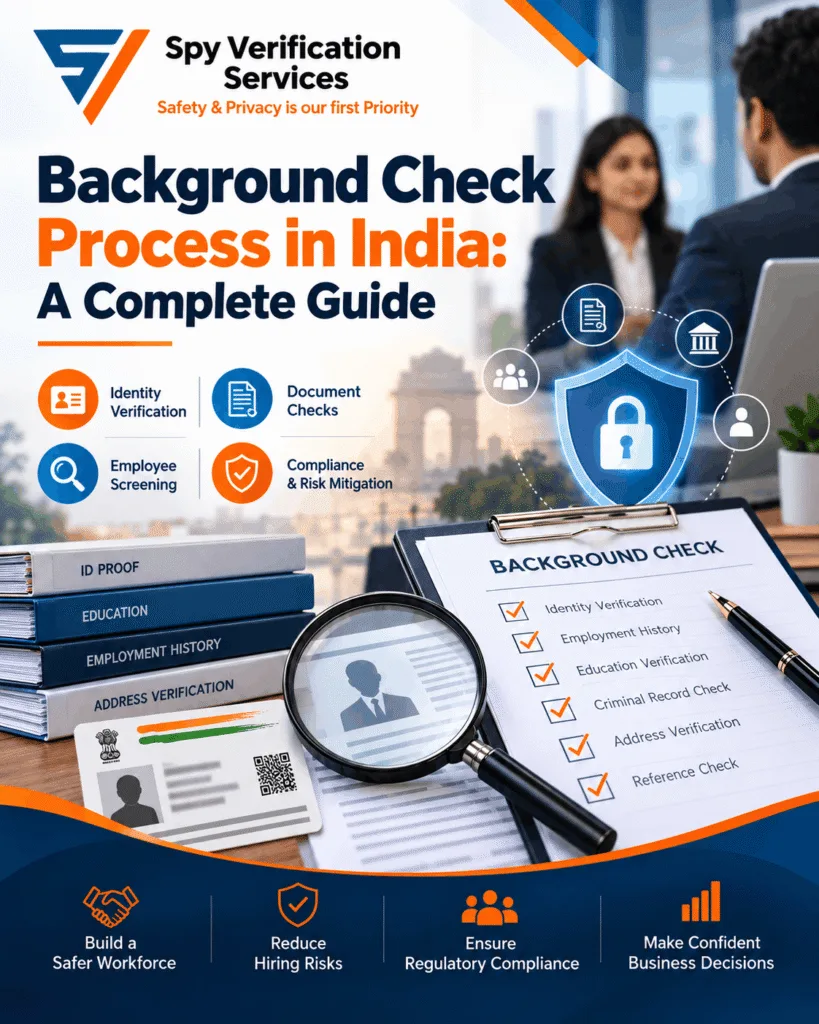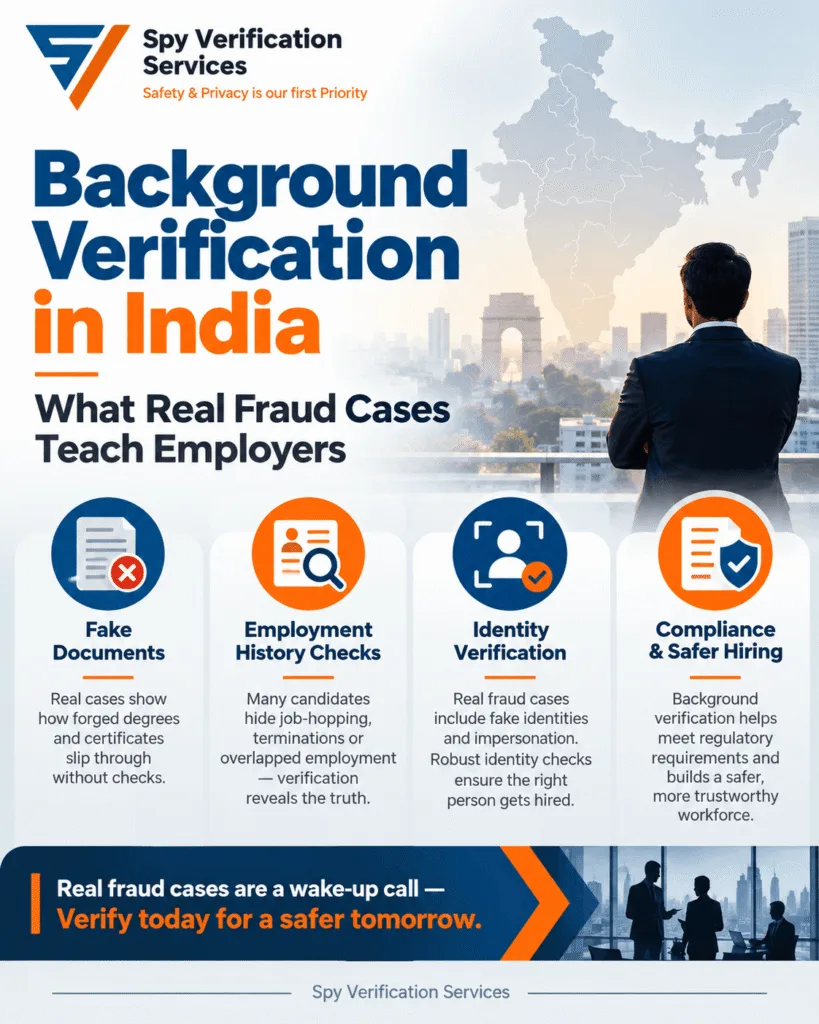

A strong resume and impressive interview can tell employers a lot about a candidate, but they cannot independently confirm every claim made during recruitment. Employment history, educational qualifications, address details, identity information and professional credentials may still need verification before an organization makes an important hiring decision.
This is why Background Verification has become an important part of responsible recruitment.
Background Verification is the process of validating job-relevant information provided by a candidate before or during employment. It helps employers confirm key facts and identify information that may require clarification before onboarding.
For organizations hiring at scale or recruiting for positions involving financial responsibility, confidential information, customer data, valuable assets, or other sensitive duties, a structured BGV Verification process can provide an important additional layer of due diligence.
Spy Verification Services brings substantial practical experience to this process. According to company-provided figures, the organization has completed 1,500,000+ verifications, served 100+ happy clients and built 10 years of experience in verification services.
Why Is Background Verification So Important?
The main purpose of Background Verification is simple: to help employers make decisions based on verified information rather than relying entirely on self-reported candidate details.
Most recruitment processes involve resumes, interviews, assessments and supporting documents. These remain valuable, but each serves a different purpose.
An interview evaluates suitability and communication. A skills assessment evaluates capability. BGV Verification helps establish whether important information presented during recruitment can be independently confirmed.
This additional layer can make the overall hiring process more structured and informed.
1. Background Verification Helps Confirm Resume Information
A candidate’s resume often contains important claims about education, previous employers, job titles, employment dates, qualifications and professional experience.
Background Verification can help validate relevant details against appropriate sources.
Employment verification, for example, may confirm:
- Previous employer information
- Employment duration
- Designation
- Other available employment details
Education verification may validate:
- Educational institution
- Qualification
- Course
- Completion or passing year
The purpose is not to assume that every candidate has provided incorrect information. Instead, verification gives employers greater confidence that validated facts support important hiring decisions.
2. BGV Verification Can Identify Important Discrepancies
Not every discrepancy found during Background Verification represents deliberate misrepresentation.
Some differences can occur because of:
- Typographical errors
- Incorrect employment dates
- Name variations
- Company restructuring
- Old records
- Incomplete documentation
- Delayed updates from previous organizations
Other discrepancies may be more significant and require closer review.
A responsible BGV Verification process should therefore distinguish between minor inconsistencies and information that could materially affect an employment decision.
Employers should review the context of the findings rather than automatically treating every difference as a failed Background Verification.
3. Background Verification Supports Better Hiring Decisions
Recruitment decisions can affect far more than one vacant position.
The employee may eventually interact with customers, manage company systems, access confidential information, handle payments, work with sensitive records, or represent the organization externally.
Background Verification provides HR teams with additional information before making those decisions.
It should not replace interviews, assessments, or managerial judgment. Instead, it complements them.
A more complete hiring decision may therefore combine:
Candidate interview + skill assessment + reference information + Background Verification + HR evaluation.
This approach gives employers a broader understanding of the individual they are considering for employment.
4. Different Roles May Require Different Background Checks
One of the most important lessons in professional Background Verification is that not every employee requires the same screening package.
A role-based approach is generally more practical.
For example:
| Position Requirement | Relevant Verification |
| Qualification-dependent role | Education verification |
| Experienced professional role | Employment verification |
| Field or location-based role | Address verification |
| Identity-sensitive position | Identity verification |
| Senior professional position | Employment and reference verification |
| Regulated/sensitive role | Additional legally permissible checks |
Employers should determine screening requirements based on job responsibilities, organizational policies, risk exposure and applicable legal requirements.
This creates a more proportionate and relevant BGV process.
5. Background Verification Can Strengthen Workplace Trust
Trust is fundamental to employer-employee relationships.
Companies provide employees with varying levels of access to data, systems, intellectual property, customer information, financial resources and physical assets.
A structured hiring process that includes relevant verification demonstrates that employee screening is taken seriously.
It can also create greater consistency because candidates applying for comparable positions can be evaluated according to predefined screening standards rather than informal decisions.
This is one reason businesses often engage professional Background Verification Companies when developing or scaling employee screening programs.
6. BGV Verification Helps HR Teams Establish a Consistent Process
Manual verification can become difficult when an organization recruits large numbers of employees.
HR teams may need to contact previous employers, verify qualifications, organize documentation, track responses, follow up on incomplete checks, identify discrepancies and prepare reports.
Professional Background Verification Companies can support a standardized workflow.
A typical process may involve:
- Defining required checks
- Collecting candidate information
- Obtaining necessary authorization
- Conducting selected verifications
- Recording responses
- Identifying discrepancies
- Seeking clarification when necessary
- Preparing a structured verification report
Standardization becomes particularly valuable as hiring volumes increase.
7. Background Verification Must Respect Candidate Privacy
Effective verification is not about collecting unlimited personal information.
Responsible Background Verification should focus on information relevant to the employment decision and be conducted in accordance with applicable privacy, employment and data protection requirements.
Organizations should consider practices such as:
- Obtaining appropriate candidate consent
- Collecting only necessary information
- Restricting access to verification reports
- Protecting personal data
- Maintaining appropriate records
- Following applicable retention requirements
- Allowing clarification of relevant discrepancies where appropriate
Privacy and responsible information handling are important indicators when businesses evaluate Background Verification Companies.

What 1,500,000+ Verifications Have Taught Spy Verification Services
First-hand operational experience matters in BGV because real cases are rarely identical.
Based on Spy Verification Services’ experience across more than 1,500,000 verifications, organizations may encounter practical issues involving:
- Different spellings of candidate names
- Incorrect employment dates
- Employers that have relocated or closed
- Delayed verification responses
- Missing academic records
- Unexplained employment gaps
- Incomplete documents
- Differences between resumes and available records
These situations demonstrate why Background Verification requires more than simply checking boxes.
Verification findings need to be documented clearly and interpreted carefully.
With 10 years of experience and 100+ happy clients, Spy Verification Services has gained practical experience in a wide range of verification situations across its screening operations.
What Should Employers Verify Before Hiring?
The appropriate checks depend on the organization and role, but a practical employer checklist may include:
Identity Verification
Helps establish that the submitted identity information corresponds with the candidate being screened.
Employment Verification
Validates important information relating to previous professional experience.
Education Verification
Confirms relevant qualifications and educational details.
Address Verification
Helps validate residential information submitted during recruitment.
Professional Reference Verification
Provides additional confirmation relating to previous professional relationships where appropriate.
Qualification Verification
Useful for positions requiring specific professional, technical, or industry credentials.
Criminal or Court Record Verification
May be considered for appropriate roles where such checks are relevant and legally permissible.
Employers should avoid requesting unnecessary checks simply because they are available.
Common Mistakes Employers Make During Background Verification
The effectiveness of BGV depends heavily on how the process is implemented.
One common mistake is using the same screening package for every position.
Another is treating every discrepancy as evidence of wrongdoing without reviewing the circumstances.
Employers should also avoid making decisions based on incomplete verification findings or on unclear reports that do not distinguish verified from unavailable information.
Privacy should never become an afterthought, either. Candidate information needs to be collected, processed, accessed and retained responsibly.
A documented Background Verification policy helps organizations establish more consistent procedures.
How to Choose Among Background Verification Companies
Selecting a BGV provider should not depend only on cost.
Employers should evaluate:
- Industry experience
- Verification capabilities
- Quality of reporting
- Data-handling practices
- Ability to manage hiring volumes
- Communication and support
- Process transparency
- Methods for handling discrepancies
Operational experience is especially important because verification cases frequently involve records that are delayed, incomplete, inconsistent, or difficult to confirm.
Spy Verification Services reports 1,500,000+ completed verifications, 100+ happy clients and 10 years of experience, providing measurable evidence of practical involvement in the Background Verification field.
Why Trust Spy Verification Services?
Spy Verification Services focuses on Background Verification and related candidate screening requirements for organizations.
Company-provided operational figures support its experience:
1,500,000+ verifications completed
100+ happy clients
10 years of experience
Rather than treating BGV as a simple pass-or-fail activity, a responsible verification approach focuses on gathering relevant information, clearly documenting findings, identifying discrepancies and supporting better-informed employer decisions.
The Bottom Line
Background Verification is important because it helps employers validate candidate information before relying on it for important hiring decisions.
A well-structured BGV Verification process can strengthen recruitment by confirming relevant employment, education, identity, address, qualification and other job-related information.
However, effective screening should also be proportionate, privacy-conscious, clearly documented and relevant to the position being filled.
Organizations comparing Background Verification Companies should therefore look beyond pricing and consider practical experience, verification standards, reporting quality, scalability, information handling and support.
With 10 years of experience, more than 1,500,000 verifications and 100+ happy clients, Spy Verification Services offers substantial practical experience for organizations seeking a structured approach to Background Verification.

Frequently Asked Questions
1. Why is Background Verification important before hiring?
Background Verification helps employers validate important candidate information, identify relevant discrepancies and make recruitment decisions using independently verified information alongside interviews and assessments.
2. What is BGV Verification?
BGV Verification stands for Background Verification. It is the process of checking information such as employment, education, identity, address, qualifications and other relevant candidate details.
3. What information is checked during Background Verification?
The scope depends on the position and employer. Checks may include identity, employment history, education, address, professional references, qualifications, employment gaps and other appropriate information.
4. Can Background Verification find employment discrepancies?
Yes. Employment verification may identify differences in employer information, designation, employment dates, or other available records. Any discrepancy should be evaluated according to its relevance and circumstances.
5. Does every employee need the same BGV checks?
No. Background Verification should ideally be role-based. Different positions involve different responsibilities and risks, so employers should select checks relevant to the specific role.
6. How should employers choose Background Verification Companies?
Employers should assess experience, verification services, reporting standards, privacy practices, scalability, process transparency and customer support when comparing Background Verification Companies.
7. Is candidate consent important in Background Verification?
Appropriate consent and privacy procedures may be required depending on the jurisdiction, type of check and applicable regulations. Employers should ensure their Background Verification process complies with relevant employment and data-protection requirements.